
MEDICALLY REVIEWED BY
Dr. Batul Patel (Dermatologist)
Medical Director – The Bombay Skin Clinic
Dr. Batul Patel is an award winning certified dermatologist, honoured as the “Dermatologist of the Year 2023” at the national level by The Economic Times. View profile
What Is CO2 Laser | Good Candidate | Safety & Side Effects | CO2 vs Alternatives | Treatment Cost
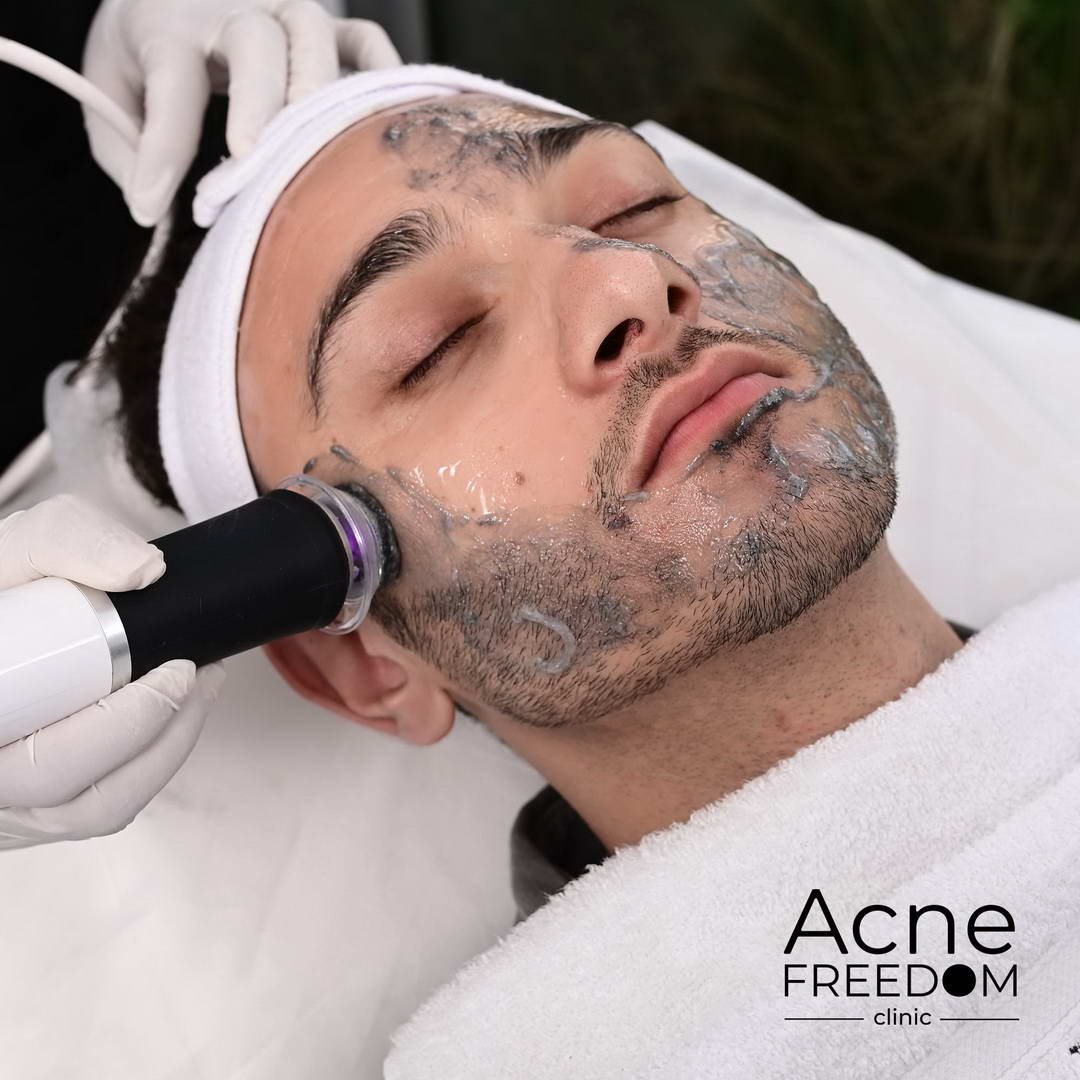
Fractional CO2 laser is an advanced skin resurfacing treatment used by some clinics for acne scars, uneven texture, open pores and selected signs of skin ageing. Acne Freedom Clinic currently does not offer Fractional CO2 Laser. This guide is educational, so patients in Mumbai can understand where it may fit, when it may not be suitable, and what questions to ask before choosing any scar procedure.
At Acne Freedom Clinic, we assess acne, acne marks and acne scars, then guide patients on suitable acne control, scar care options, alternatives, or referral pathways when a treatment is not available with us.
What Is Fractional CO2 Laser Treatment?
Fractional CO2 laser is an ablative laser resurfacing treatment. It uses carbon dioxide laser energy to create tiny controlled columns of heat in the skin while leaving surrounding skin partly untouched. This fractional pattern helps the skin heal in a more organised way.
For acne scars, the goal is to support collagen remodelling and improve the look of uneven texture over time. Dermatology guidance recognises laser resurfacing as one of the treatment options that may help reduce the appearance of acne scars when chosen correctly for the patient and scar type [1].
What Can Fractional CO2 Laser Help Improve?
Fractional CO2 laser is usually considered when acne is under control and the main concern is scarring or texture. At clinics that offer this procedure, it may be used on the face and, in selected cases, other areas after assessment.
Acne Scars
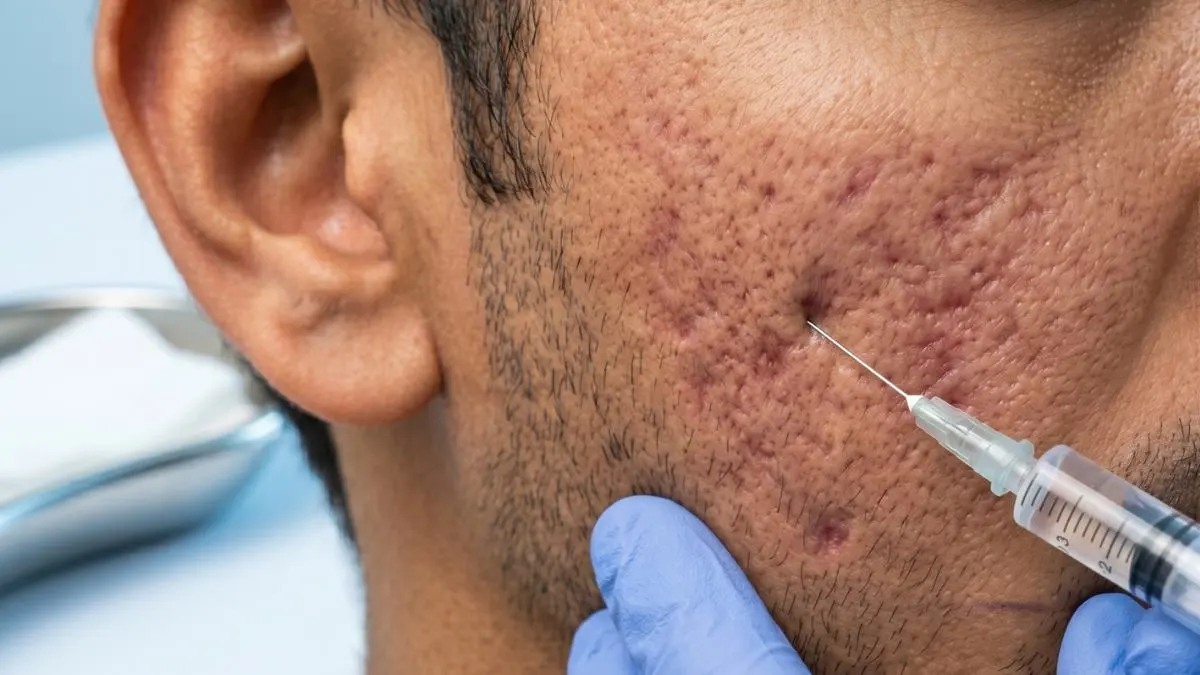
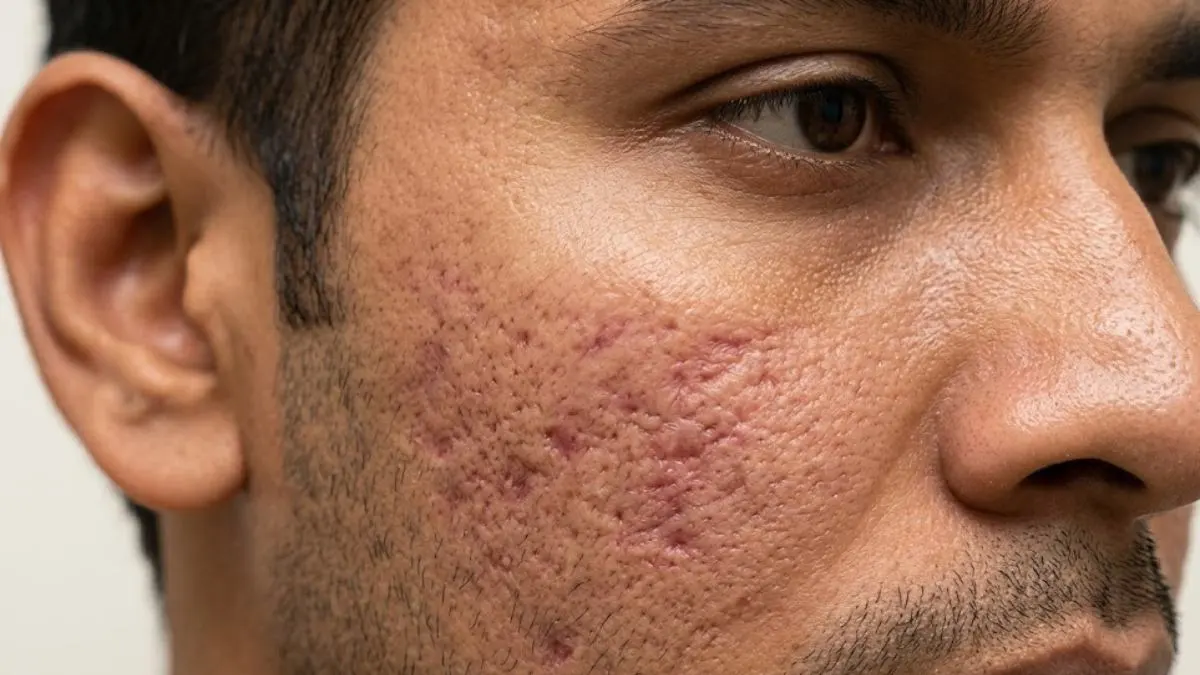
Fractional CO2 laser may help with atrophic acne scars, especially scars that look like small depressions or uneven areas in the skin. It is often considered for boxcar scars and some rolling scars. You can learn more about the types of acne scars to understand which category your scars fall into.
Very deep ice-pick scars, tethered scars or mixed scar patterns may need combination treatment.
Uneven Skin Texture
Fractional CO2 laser can support smoother-looking texture by resurfacing tiny portions of the skin and stimulating repair.
Open Pores and Roughness
Open pores cannot be closed like a door, but their appearance may soften when texture and collagen support improve. For those exploring open pores treatment in Mumbai, an assessment will clarify which approach suits your skin best.
Fine Lines and Superficial Skin Changes
Fractional CO2 laser is also used for fine lines and selected superficial skin changes when relevant to the overall plan.
What Are the Advantages of Fractional CO2 Laser?
The key advantage is that fractional CO2 laser works on texture and collagen, not only surface marks. This makes it useful for selected acne scar concerns where creams alone have limited impact.
- It can target depressed acne scars and uneven texture.
- It supports collagen remodelling over several weeks to months.
- It can be adjusted in intensity based on scar depth, skin type and downtime tolerance.
- It may improve overall skin smoothness when used appropriately.
- It can be combined with other acne scar treatments when scars are mixed.
Clinical studies and reviews have reported improvement in acne scarring with fractional CO2 laser, but results vary by scar type, settings, skin type, number of sessions and aftercare [2]. This is why an in-clinic scar mapping session is important before starting.
Who Is a Good Candidate for Fractional CO2 Laser?
A good candidate is not decided only by the presence of acne scars. During an acne scar assessment, factors such as acne activity, skin colour, pigmentation tendency, lifestyle, downtime availability and medical history need to be reviewed.
You May Be Suitable If
- You have acne scars after active acne is mostly under control.
- You have uneven texture, boxcar scars, rolling scars or mixed superficial scars.
- You can follow strict sun protection and aftercare.
- You can accept visible downtime for a few days.
- You understand that improvement is gradual and usually needs a course of treatment.
It is not usually the first step when acne is still inflamed, painful or frequently breaking out.
You May Need a Different Plan If
- You have active acne that needs control first.
- You have a strong tendency for pigmentation after procedures.
- You have deep ice-pick scars that may respond better to other scar-specific methods.
- You cannot avoid sun exposure during the healing phase.
- You need a no-downtime option due to work or social commitments.
In these cases, non-Fractional CO2 options such as MNRF for acne scars, chemical peels, acne control plans, topical support or staged scar treatment may be discussed before considering laser resurfacing elsewhere.
Who Should Avoid or Delay Fractional CO2 Laser?
Fractional CO2 laser may need to be delayed or avoided in some situations. This is not to discourage treatment, but to make the plan safer.
- Active bacterial, viral or fungal infection in the treatment area.
- Active, uncontrolled acne in the area being treated.
- Recent tanning or heavy sun exposure.
- History of keloids, poor wound healing or hypertrophic scarring.
- Pregnancy, certain medical conditions or medicines that affect healing, based on dermatologist review.
- Unrealistic expectations or inability to follow aftercare.
Medical references on ablative and CO2 laser resurfacing highlight that patient selection matters because complications can include infection, pigment change, burns, prolonged redness and scarring in some cases [3].
How Does Fractional CO2 Laser Work on Acne Scars?
Acne scars form when inflammation damages collagen during the healing process. Some scars are shallow, some are deep, and some are attached to deeper tissue. Fractional CO2 laser works mainly by controlled resurfacing and collagen stimulation.
Controlled Micro-Injury
The laser creates tiny treatment zones in the skin. These micro-injuries trigger the body’s repair response. Because the treatment is fractional, untreated skin between the laser points supports healing.
Collagen Remodelling
After treatment, the skin begins a repair process. New collagen and tissue remodelling can continue over weeks and months. This is why the skin may keep improving even after the initial redness and peeling settle.
Reviews on fractional CO2 laser for acne scars describe its role in stimulating wound healing and collagen remodelling, which can help improve scar appearance over a series of sessions [2].
Why Scar Type Matters
Not all acne scars respond in the same way. Shallow boxcar scars may respond differently from rolling scars or ice-pick scars. Some scars are tethered below the surface, so resurfacing alone may not give the desired improvement.
At Acne Freedom Clinic, we first examine the scar pattern. Since we do not offer Fractional CO2 Laser, our role is to help you understand whether resurfacing laser may be relevant in principle, whether non-laser acne scar options may suit you better, or whether a referral pathway should be considered.
What Results Can You Expect and When?
Fractional CO2 laser does not erase acne scars. It aims to improve the appearance of scars, texture and skin quality over time. A realistic expectation is gradual softening, not instant smooth skin.
Early Changes
Once redness and peeling settle, the skin may look fresher and smoother. Some patients notice early improvement in texture, but this is not the final result.
Collagen-Based Improvement Over 2 to 6 Months
Collagen remodelling takes time. Visible improvement often builds over 2 to 6 months, especially when sessions are spaced properly and aftercare is consistent.
Research supports its role in depressed acne scars, but outcomes differ between patients and studies [4].
Why Results Vary From Person to Person
Results depend on many factors:
- Type and depth of scars.
- Age of scars.
- Skin type and pigmentation tendency.
- Active acne control.
- Laser settings and number of sessions.
- Healing response and aftercare.
- Whether combination treatments are needed.
For deeper scars, fractional CO2 laser may be an adjunct or supportive treatment rather than the only procedure.
Is Fractional CO2 Laser Safe for Indian Skin?
Fractional CO2 laser can be used in Indian skin when the patient is selected carefully, settings are conservative and aftercare is followed. The main concern in deeper skin tones is post-inflammatory hyperpigmentation, which means temporary or sometimes persistent darkening after inflammation.
Indian dermatology literature discusses fractional lasers as useful for scars and texture, while emphasising correct parameters and training [5].
Safety is not only about the device. It is also about diagnosis, settings, spacing, hygiene, aftercare and follow-up. This is why dermatologist oversight is important for laser resurfacing.
Safety, Side Effects and Contraindications
All resurfacing treatments carry some risk. During an acne scar consultation, we discuss common expected effects, less common risks, and whether laser resurfacing should be considered elsewhere or avoided for your skin.
Common Temporary Effects
- Redness.
- Warmth or burning sensation for a short period.
- Swelling.
- Dryness, roughness or peeling.
- Mild sensitivity during the healing phase.
These effects are expected after fractional resurfacing and usually settle with correct care.
Less Common Risks
- Post-inflammatory hyperpigmentation.
- Prolonged redness.
- Acne flare or acne-like eruptions.
- Infection.
- Burns, scarring or delayed healing in rare cases.
Published medical references on laser complications list pigment changes, infection, burns and scarring as possible adverse effects of laser procedures [6]. This is why active infection, recent tanning or unsuitable skin may require delaying or avoiding laser resurfacing.
When We Take Extra Caution
Extra caution is needed if you have darker marks after acne, a history of keloids, sensitive skin, recent procedures, frequent outdoor exposure, or active acne. A treating dermatologist may reduce intensity, prepare the skin first, delay treatment or suggest an alternative.
Fractional CO2 Laser vs Other Acne Scar Treatments
There is no single best treatment for every acne scar. The right choice depends on the scar pattern and the patient’s skin.
Fractional CO2 Laser vs MNRF
Fractional CO2 laser resurfaces the skin and can be useful for texture and selected depressed scars. MNRF uses microneedles with radiofrequency energy and may be preferred when downtime needs to be lower or pigmentation risk needs extra caution.
Combination planning is common in mixed acne scars.
Fractional CO2 Laser vs Microneedling
Microneedling is generally milder and has less downtime. It may help mild scars and texture, but deeper scars often need more targeted energy-based or procedural treatments. Dermapen 4 microneedling is one option available at Acne Freedom Clinic for suitable candidates.
Fractional CO2 laser is usually more intensive than basic microneedling and needs more careful aftercare.
Fractional CO2 Laser vs Chemical Peels
Chemical peels can help acne marks, superficial pigmentation, oiliness and mild texture. They are not usually enough for deeper depressed acne scars.
Peels may still be part of the overall acne and pigmentation plan. We offer a range of acne peels in Mumbai suited to different skin types and concerns.
Fractional CO2 Laser vs PRF or PRP
PRF or PRP are regenerative support treatments. They may support healing and skin quality, but they do not resurface the skin in the same way as fractional CO2 laser. Learn more about PRF for acne scars in Mumbai as a complementary option.
When Can Fractional CO2 Laser Be Combined With Other Treatments?
Combination treatment is common when acne scars are mixed. A patient may have boxcar scars, rolling scars, ice-pick scars, open pores and pigmentation at the same time.
In clinics that offer Fractional CO2 Laser, it may be combined or sequenced with:
- MNRF for collagen support and deeper texture work.
- Subcision for tethered rolling scars.
- Chemical peels for acne marks and superficial pigmentation.
- Acne control treatment if breakouts are still active.
- Regenerative support such as PRP or PRF in selected cases.
When evidence is mixed or the expected benefit is supportive, the treatment should be explained as an adjunct. The aim should be to build a practical plan instead of adding procedures without a clear reason.
Fractional CO2 Laser Cost in Mumbai
The cost of fractional CO2 laser in Mumbai can vary based on the clinic, dermatologist involvement, treatment area, scar severity, device platform, number of passes and whether combination procedures are included.
Indicative Pricing
As an indicative range, fractional CO2 laser treatment for acne scars in Mumbai may start from around ₹8,000 to ₹20,000 per session for focused areas. Full-face or advanced scar protocols may cost more.
This is only a planning estimate. Since Acne Freedom Clinic does not offer Fractional CO2 Laser, the exact cost would need to be confirmed with a treating clinic that provides the procedure after assessment.
What Affects the Cost?
- Treatment area, such as cheeks, temples, forehead or full face.
- Scar severity and scar type.
- Number of sessions needed.
- Whether combination treatments are advised.
- Level of dermatologist planning and follow-up.
- Post-procedure care requirements.
FAQs on Fractional CO2 Laser in Mumbai
Is fractional CO2 laser good for acne scars?
Fractional CO2 laser can be a good option for selected acne scars, especially texture changes, boxcar scars and some rolling scars. It may not be enough for every scar type, so a dermatologist should map your scars before treatment.
Is fractional CO2 laser painful?
At clinics that offer Fractional CO2 Laser, a numbing cream is usually applied before treatment. You may still feel heat, prickling or a stinging sensation, but many patients tolerate the session with proper preparation.
How many sessions will I need?
Many patients may need 3 to 5 sessions at a treating clinic, but this varies. Mild texture may need fewer sessions, while deeper or mixed scars may need a longer plan with combination treatments.
What is the downtime after fractional CO2 laser?
Visible downtime is usually around 3 to 7 days, depending on treatment intensity and healing response. Redness, swelling, roughness, dryness and peeling can occur during recovery.
Is fractional CO2 laser better than MNRF?
It depends on your skin and scar type. Fractional CO2 laser is stronger for resurfacing. MNRF may be preferred for deeper collagen work, lower downtime or higher pigmentation caution. Some patients benefit from both in a planned sequence.
What is the cost of fractional CO2 laser in Mumbai?
Indicative pricing may start from around ₹8,000 to ₹20,000 per session for focused acne scar areas in Mumbai. The final cost depends on area, scar severity, number of sessions and whether combination treatments are required.
Citation Sources
1. American Academy of Dermatology Association. Acne scars: Consultation and treatment. Available from: https://www.aad.org/public/diseases/acne/derm-treat/scars/treatment
2. Ptaszek B, et al. The Use of a Fractional Laser in Acne Scar Treatment: A Systematic Review. PubMed. Available from: https://pubmed.ncbi.nlm.nih.gov/40566567/
3. Yumeen S, et al. Laser Carbon Dioxide Resurfacing. StatPearls. NCBI Bookshelf. Available from: https://www.ncbi.nlm.nih.gov/books/NBK560544/
4. Lin L, et al. A systematic review and meta-analysis on the effects of ultra-pulse CO2 fractional laser in the treatment of depressed acne scars. PubMed. Available from: https://pubmed.ncbi.nlm.nih.gov/35249351/
5. Goel A. Fractional lasers in dermatology: Current status and recommendations. Indian Journal of Dermatology, Venereology and Leprology. Available from: https://ijdvl.com/fractional-lasers-in-dermatology-current-status-and-recommendations/
6. Prohaska J, et al. Laser Complications. StatPearls. NCBI Bookshelf. Available from: https://www.ncbi.nlm.nih.gov/books/NBK532248/
MEDICALLY REVIEWED BY
Dr. Batul Patel (Dermatologist)
Medical Director – The Bombay Skin Clinic
Dr. Batul Patel is an award winning certified dermatologist, honoured as the “Dermatologist of the Year 2023” at the national level by The Economic Times. View profile