
MEDICALLY REVIEWED BY
Dr. Batul Patel (Dermatologist)
Medical Director – The Bombay Skin Clinic
Dr. Batul Patel is an award winning certified dermatologist, honoured as the “Dermatologist of the Year 2023” at the national level by The Economic Times. View profile
What Is Nodular Acne | Causes & Care | Treatment Options | Treatment in Mumbai | Treatment Cost
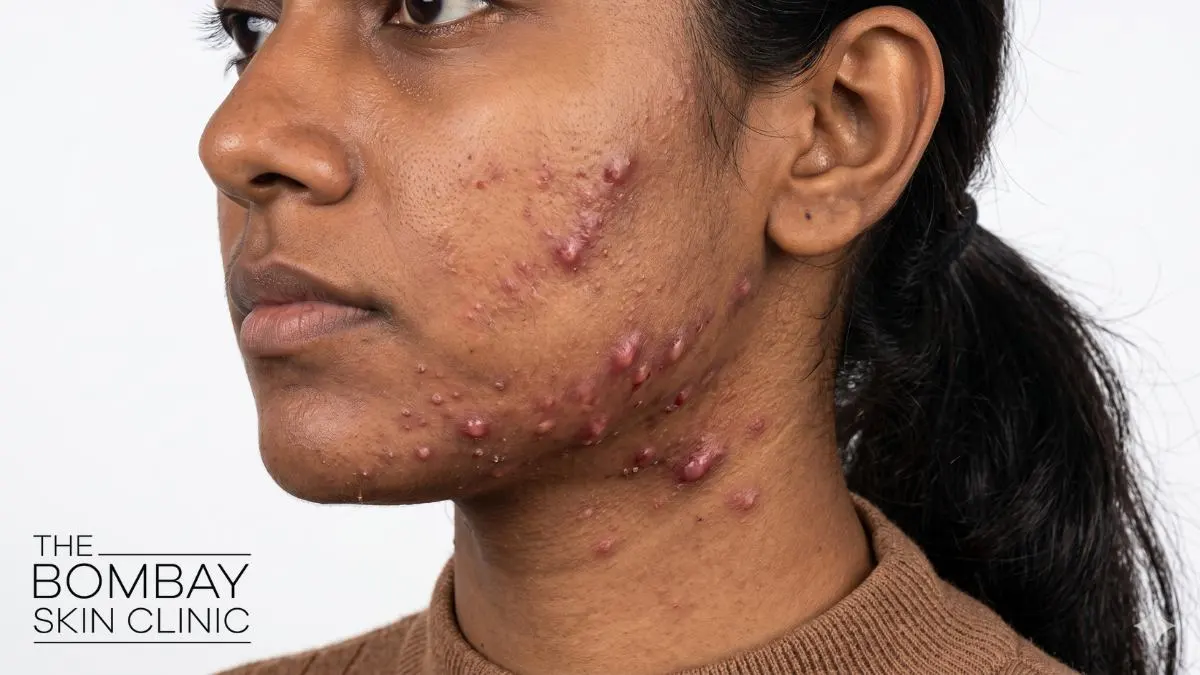
Nodular acne is a painful form of acne where hard lumps form deep under the skin. These lumps can stay for weeks, feel tender to touch and may leave dark marks or scars if inflammation continues.
At Acne Freedom Clinic in Mumbai, we treat nodular acne with a dermatologist-led plan that looks at active acne, triggers, scarring risk and skin sensitivity. This guide explains causes, treatment options, timelines, safety and when to book an in-clinic assessment.
What is nodular acne?
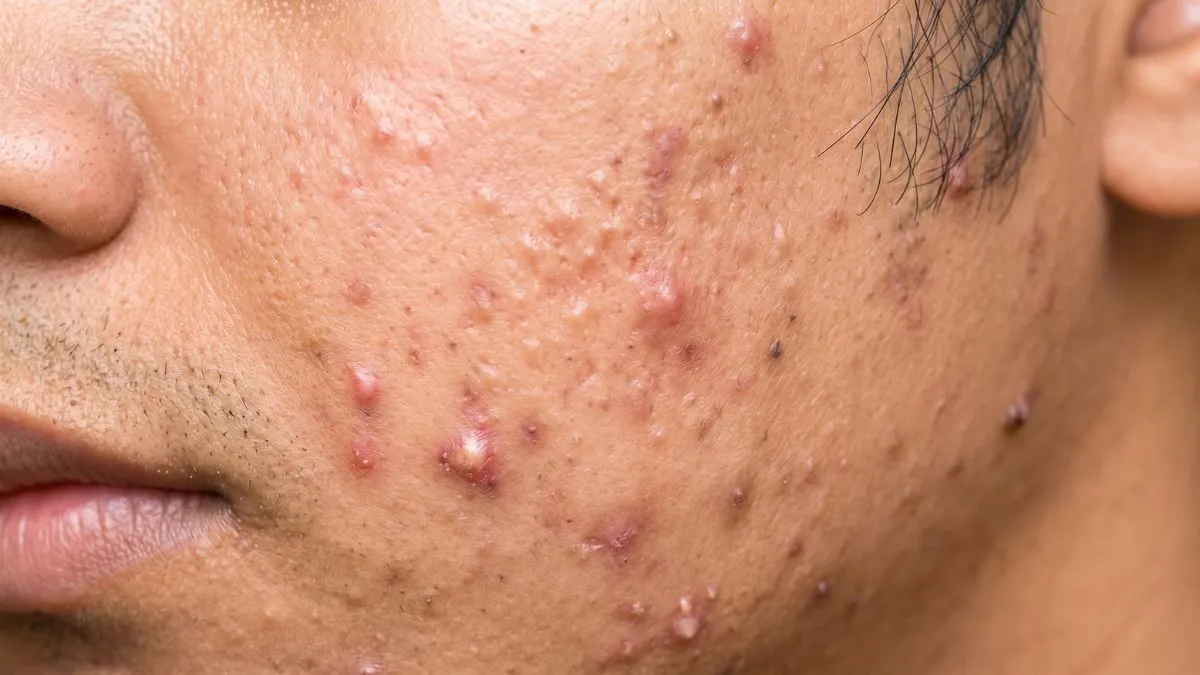
Nodular acne is a severe type of inflammatory acne. It appears as firm, deep, painful bumps under the skin, often on the cheeks, jawline, chin, back or chest.
Unlike whiteheads or small pimples, nodules usually do not open easily at the surface. They sit deeper in the skin and carry a higher risk of marks and scars. Nodulocystic acne is recognised in clinical guidance as a type that often needs specialist care [1].
Why does nodular acne need early dermatologist care?
Nodular acne needs early care because it is deeper and more inflammatory than regular pimples. Waiting too long, squeezing lesions or using harsh products can increase swelling, pigmentation and scarring risk.
In Mumbai, heat, sweating, pollution, helmet friction, gym routines, thick sunscreens, hair oils and steroid-mix creams can make acne harder to control. Indian acne workflows also advise doctors to consider topical steroid-induced acne and to treat early so scarring is minimised [2].
A dermatologist-led plan helps identify the acne type, reduce active inflammation and choose safe treatment options for your skin.
What are the advantages of treating nodular acne early?
- It helps calm painful swelling before inflammation becomes more severe.
- It may reduce the chance of acne scars and long-lasting dark marks.
- It avoids repeated trial-and-error with harsh products.
- It helps identify triggers such as hormones, hair products, friction or steroid creams.
- It supports a staged plan for active acne first, then marks and scars later.
Acne can also affect mood, confidence and social life, so timely care matters beyond appearance [1].
Who is a good candidate for nodular acne treatment?
You may be a good candidate if you have painful acne lumps that are not improving with basic skincare or over-the-counter products.
You may be eligible if
- You have hard, painful bumps under the skin.
- Your acne lesions last for many days or weeks.
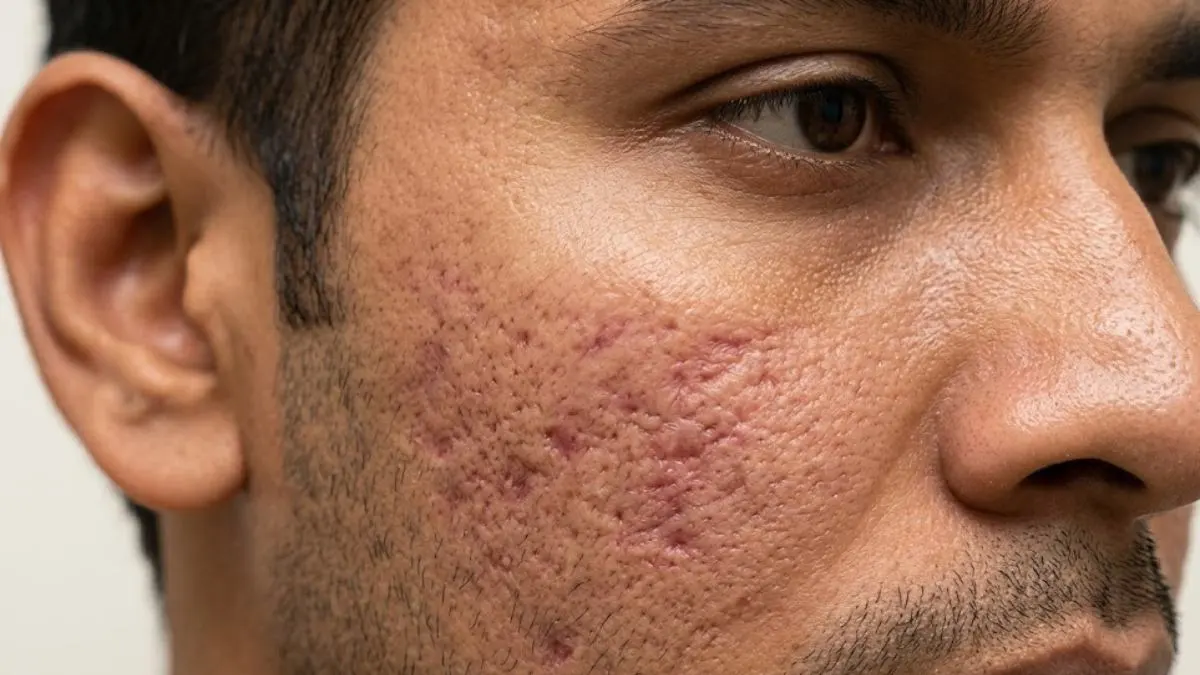
- You notice dark marks, pits or early scars.
- You keep getting breakouts on the same areas.
- You have acne on the face, chest, back or jawline.
You may need a more cautious plan if
- You are pregnant, planning pregnancy or breastfeeding.
- You have liver disease, severe medicine allergy or other chronic health concerns.
- You are taking medicines that may interact with acne treatment.
- Your skin barrier is very irritated or sensitive.
- You have used fairness creams, steroid-mix creams or strong peels without medical advice.
When urgent medical review may be needed
- Your acne is very painful, swollen or spreading fast.
- You have deep cysts, draining lesions or thick scars.
- You develop fever or sudden severe inflammation.
- Your acne is affecting your confidence, work or social life.
- You are unsure whether the lesions are acne, boils or another skin condition.
NICE advises referral for nodulocystic acne, acne conglobata or diagnostic uncertainty [1].
What causes nodular acne?
Nodular acne usually happens due to a mix of excess oil, clogged pores, acne-related bacteria and deeper inflammation. Hormones, family tendency, stress, sleep disruption and product triggers can also contribute.
Common aggravating factors include:
- Heavy hair oils or comedogenic skincare.
- Helmet, mask or collar friction.
- Sweat remaining on the skin after workouts.
- Repeated picking or squeezing.
- Use of steroid creams or unknown acne creams.
Acne develops when follicles become blocked with oil and dead skin cells, followed by inflammation and bacterial activity. In nodular acne, this process affects deeper tissue [3].
How is nodular acne diagnosed at Acne Freedom Clinic?
Diagnosis starts with a detailed skin assessment. We check the type of acne, number of nodules, pain, location, scarring risk, pigmentation risk and skin sensitivity.
Your consultation may include:
- Review of current skincare, sunscreen and haircare.
- History of acne medicines, peels or salon treatments.
- Assessment of active acne, marks and scars.
- Discussion of menstrual pattern or hormonal clues where relevant.
- Medical history review before any prescription plan.
We also check whether the condition is truly nodular acne or something that looks similar, such as folliculitis, boils, steroid acne or acne conglobata. Patients with cystic acne are assessed separately as the treatment approach may differ.
How does nodular acne treatment work?
Treatment works by reducing deep inflammation, preventing new blocked pores, managing triggers and protecting the skin from scars.
Step 1: Calm active inflammation
The first goal is to reduce pain, redness and swelling. Depending on your acne grade, the dermatologist may consider prescription treatment and selected in-clinic support.
Step 2: Control oil, clogged pores and bacteria
The next step is to control the acne cycle. This may include topical or oral prescription classes, barrier-safe skincare and non-comedogenic sunscreen.
AAD guidelines support evidence-based acne care using options such as topical retinoids, benzoyl peroxide, antibiotics when appropriate, hormonal therapies in selected patients and isotretinoin for severe acne under medical supervision [4].
Step 3: Reduce recurrence triggers
We look for repeat patterns such as jawline flares, hair oil use, helmet friction, sweat, stress, poor sleep, product reactions or early stopping of treatment.
The aim is not to blame lifestyle. The aim is to make the plan practical for daily Mumbai life.
Step 4: Protect against acne marks and scars
Indian skin can be more prone to post-acne pigmentation. A painful nodule may flatten but leave a dark mark for weeks or months.
We first work on active acne control. Scar and mark treatments are planned later, when the skin is calmer and ready.
What treatment options may be used for nodular acne?
Nodular acne treatment is personalised. The right plan depends on acne severity, medical history, scarring risk and treatment tolerance.
Prescription-based acne care
Prescription care may include topical medicines, oral medicines, hormonal evaluation or stronger acne medicines in selected severe cases. These should be used only after consultation.
Antibiotic use, when needed, should be guided responsibly and not continued unnecessarily because resistance is a concern [4].
In-clinic acne treatments as supportive options
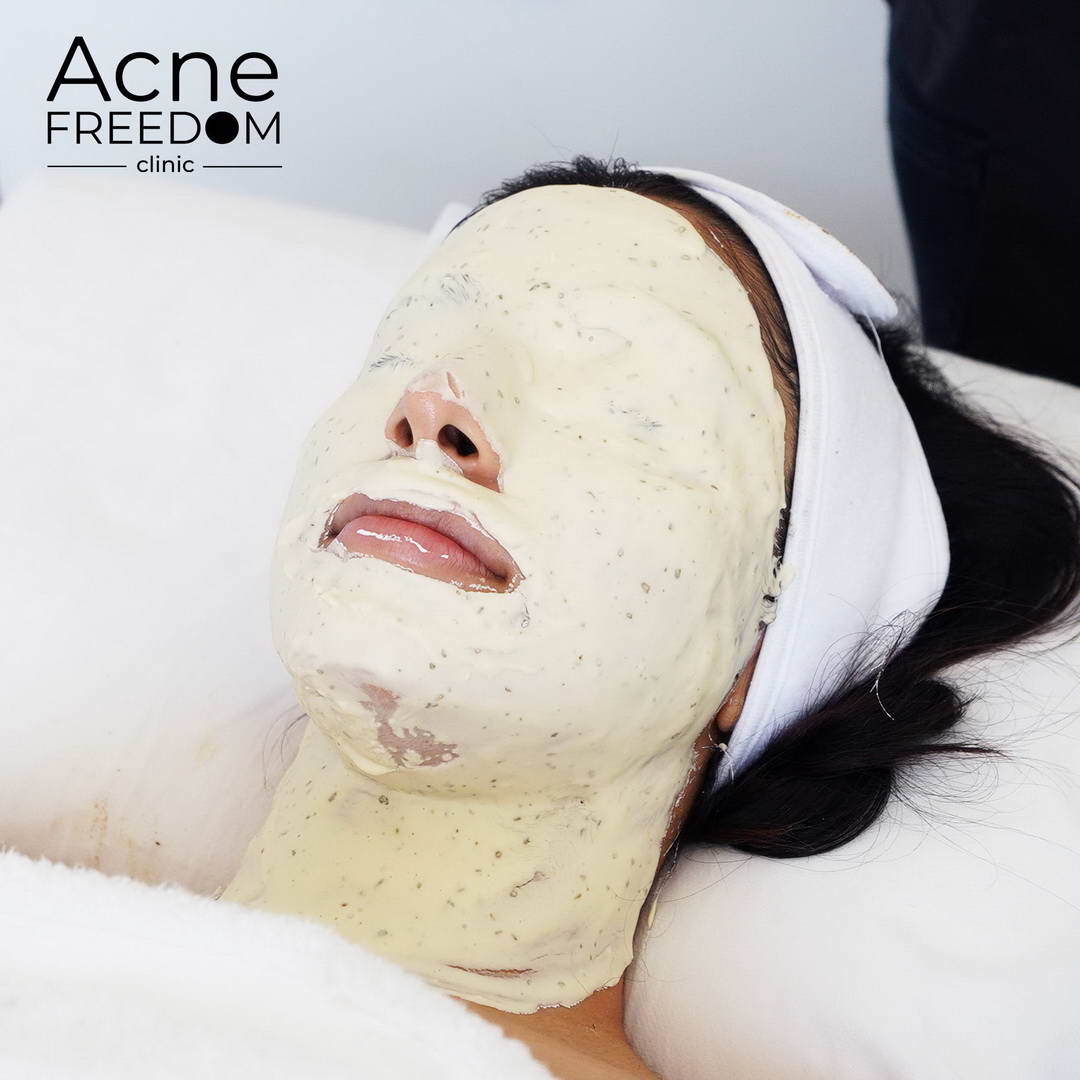
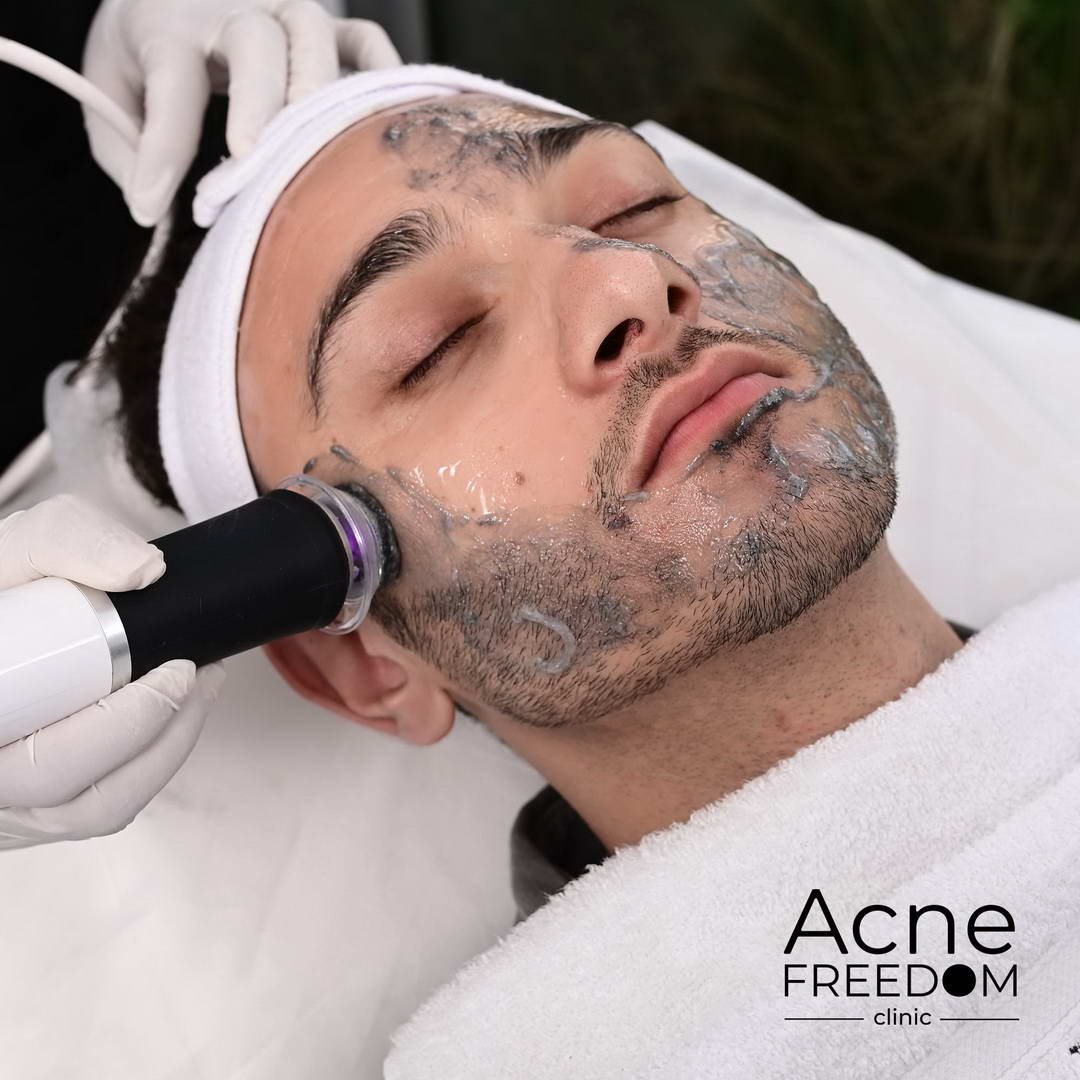
In-clinic treatments can support care but should not replace medical assessment for deep, painful acne. Depending on the case, supportive options may include dermatologist-selected peels, calming acne treatments, comedone care or device-based support at the right stage.
Evidence for physical modalities is mixed, so they should be presented as adjunctive options for nodular acne, not stand-alone fixes [1]. Our acne healing facial is one supportive option considered at the right stage.
Intralesional treatment for selected painful nodules
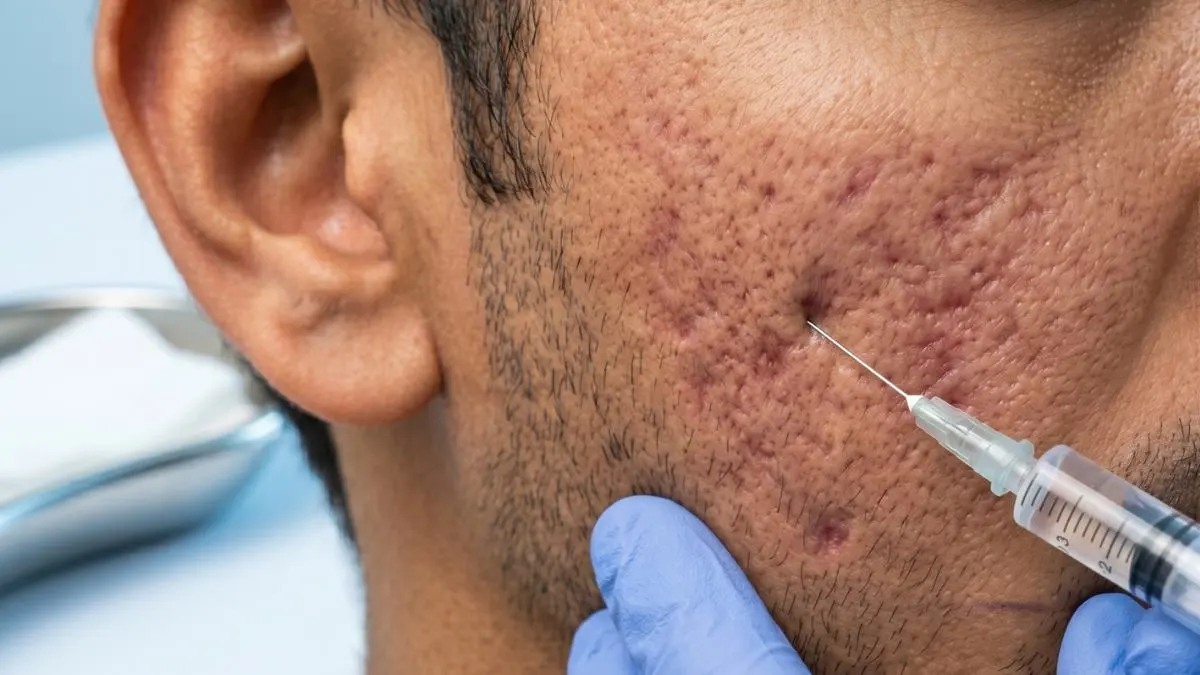
For a very painful swollen nodule, the dermatologist may consider a targeted intralesional treatment. This is only for selected lesions after assessment.
It should not be attempted at home. It also does not replace the full acne-control plan.
Hormonal evaluation when acne pattern suggests it
Hormonal evaluation may be advised when acne flares mainly around the jawline or chin, worsens cyclically, or appears with irregular periods, facial hair growth or hair thinning. We may refer to our hormonal acne treatment programme when this pattern is identified.
Hormonal treatment is not suitable for everyone and should not be self-started.
Scar-prevention and post-acne mark care
Scar prevention begins while acne is active. We focus on reducing inflammation, avoiding picking and using barrier-safe care.
Once acne is controlled, a separate plan may be made for dark marks, texture or scars.
What is the usual session plan and comfort level?
The plan depends on acne severity. Some patients need prescription-led care and reviews. Others may need supportive in-clinic sessions along with medicines.
Consultation and skin analysis
The first visit includes acne grading, history, skincare review and discussion of your concerns. We also check for scarring, steroid cream use and signs of hormonal acne.
Treatment frequency and total course
Nodular acne usually needs a few months of structured care. A typical plan may include:
- Initial consultation and acne grading.
- Prescription and skincare correction.
- Review visits to check response and tolerance.
- Supportive in-clinic sessions if suitable.
- Maintenance after active acne improves.
Most acne plans are assessed over several weeks, not in a few days [1].
What the treatment feels like
Prescription care may cause dryness, mild peeling or sensitivity while the skin adjusts. In-clinic treatments may feel like tingling, warmth, pressure or short discomfort depending on the procedure.
Follow-up and maintenance
Follow-up helps us adjust the plan if the skin becomes too dry, acne flares or marks increase. Maintenance helps reduce repeated breakouts after the active phase improves.
Is there any downtime after nodular acne treatment?
Prescription-based care usually has no social downtime, but the skin may feel dry, sensitive or mildly irritated.
Supportive in-clinic treatments may cause temporary redness, dryness, peeling or sensitivity. Most patients continue routine activities, but sun protection and gentle skincare are important.
What results can you realistically expect and when?
Nodular acne improves gradually. Pain may reduce before every lump becomes flat. Marks usually take longer than active acne to fade.
First few weeks
The first goal is fewer painful new flares and better tolerance to treatment. Some new lesions may still appear while the acne cycle is being controlled.
6 to 12 weeks
Many patients start seeing clearer control by this stage. Pain, swelling and frequency of new nodules may reduce, but dark marks may still remain.
3 to 6 months
For severe or recurrent nodular acne, 3 to 6 months is a more realistic treatment horizon. If scars have formed, they may need a later staged plan.
Long-term maintenance
Maintenance may include a simple skincare routine, trigger control and review visits. The aim is steady control and fewer painful flares. No ethical acne plan should promise that acne will never return.
Nodular acne vs cystic acne: What is the difference?
Nodular acne usually feels firm and hard under the skin. Cystic acne may feel softer, more fluid-filled or fluctuant.
Many patients have a mix of both, called nodulocystic acne. Both types are deep, painful and more likely to scar, so dermatologist-led care is important.
Nodular acne treatment vs regular facial or home care: Why dermatologist-led care matters
Regular facials, scrubs or home remedies do not treat the deep inflammation of nodular acne. Aggressive massage or extraction can worsen pain, pigmentation and scarring.
Dermatologist-led care addresses diagnosis, prescription planning, safety checks, trigger correction and staged treatment. Home care is still useful, but it should support the medical plan.
What should you avoid if you have nodular acne?
- Do not squeeze, prick or drain nodules at home.
- Do not use toothpaste, lemon, baking soda or harsh home remedies.
- Do not apply fairness creams or steroid-mix creams.
- Do not scrub painful acne.
- Do not keep changing products every few days.
- Do not stop treatment suddenly without review.
- Do not use heavy hair oils near acne-prone areas.
What is the cost of nodular acne treatment at Acne Freedom Clinic?
The cost varies because nodular acne treatment is personalised. It depends on severity, medicines, procedures, follow-ups and whether marks or scars also need treatment.
As an indicative range, acne consultation and assessment may start from around ₹1,000 to ₹3,000 depending on the doctor and appointment type. Supportive in-clinic acne treatments may start from approximately ₹3,000 to ₹8,000 per session, depending on the treatment selected.
Medicines, tests if advised, procedures and scar treatments are usually billed separately. Final pricing is shared after assessment.
When should you book a consultation?
Book a consultation if your acne is deep, painful, hard, recurrent or leaving marks. You should also seek care if acne is affecting confidence, work or social life.
Book earlier if you have painful lumps, scarring, repeated jawline acne, steroid cream use or no improvement with basic skincare. A medical assessment helps choose the right level of treatment and avoids unnecessary procedures.
FAQs on Nodular Acne Treatment
Can nodular acne go away without treatment?
One nodule may settle, but nodular acne often recurs and can scar. Dermatologist-led care is safer than waiting through repeated painful flare-ups.
Is nodular acne the same as cystic acne?
Not exactly. Nodular acne feels firm and hard. Cystic acne may feel softer or fluid-filled. Many patients have a mix called nodulocystic acne [1].
Can I pop or drain nodular acne at home?
No. Popping or draining can push inflammation deeper, increase infection risk and worsen scarring. A dermatologist should assess painful nodules.
How long does nodular acne treatment take?
Many patients need several weeks to see fewer painful flares. Severe or recurrent nodular acne may need 3 to 6 months, with later care for marks or scars if needed.
Can nodular acne leave scars?
Yes. Because inflammation is deep, nodular acne has a higher scarring risk. Early care, not picking, and consistent treatment can reduce new scar risk.
Which doctor should I see for nodular acne in Mumbai?
See a dermatologist or dermatologist-led acne clinic, especially if acne is painful, recurrent, scarring or linked to hormonal symptoms.
Citation Sources
- National Institute for Health and Care Excellence. Acne vulgaris: management. NICE guideline NG198. Available from: https://www.nice.org.uk/guidance/ng198
- Indian Council of Medical Research. Standard Treatment Workflow: Acne and Rosacea. Available from: https://www.icmr.gov.in/icmrobject/uploads/STWs/1725967368_acne_roseacea.pdf
- Sutaria AH, Masood S, Schlessinger J. Acne Vulgaris. StatPearls. NCBI Bookshelf. Available from: https://www.ncbi.nlm.nih.gov/books/NBK459173/
- Reynolds RV, Yeung H, Cheng CE, et al. Guidelines of care for the management of acne vulgaris. Journal of the American Academy of Dermatology. 2024. Available from: https://www.jaad.org/article/S0190-9622(23)03389-3/fulltext
MEDICALLY REVIEWED BY
Dr. Batul Patel (Dermatologist)
Medical Director – The Bombay Skin Clinic
Dr. Batul Patel is an award winning certified dermatologist, honoured as the “Dermatologist of the Year 2023” at the national level by The Economic Times. View profile