
MEDICALLY REVIEWED BY
Dr. Batul Patel (Dermatologist)
Medical Director – The Bombay Skin Clinic
Dr. Batul Patel is an award winning certified dermatologist, honoured as the “Dermatologist of the Year 2023” at the national level by The Economic Times. View profile
What is Dermapen 4 treatment?
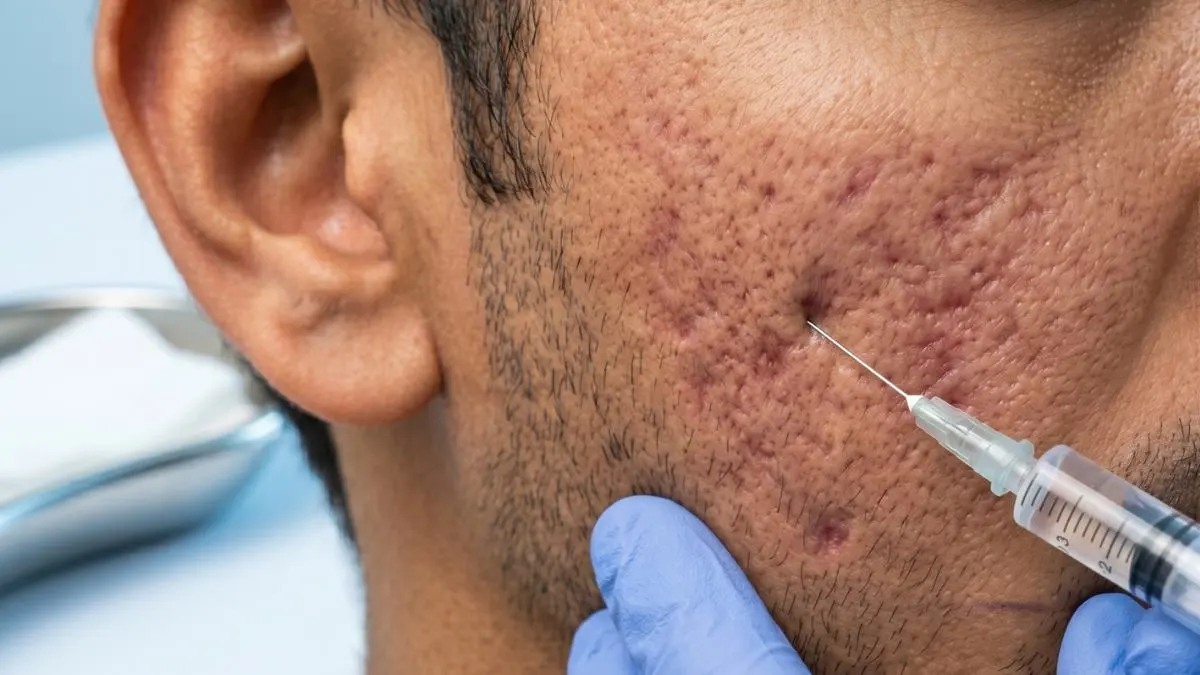
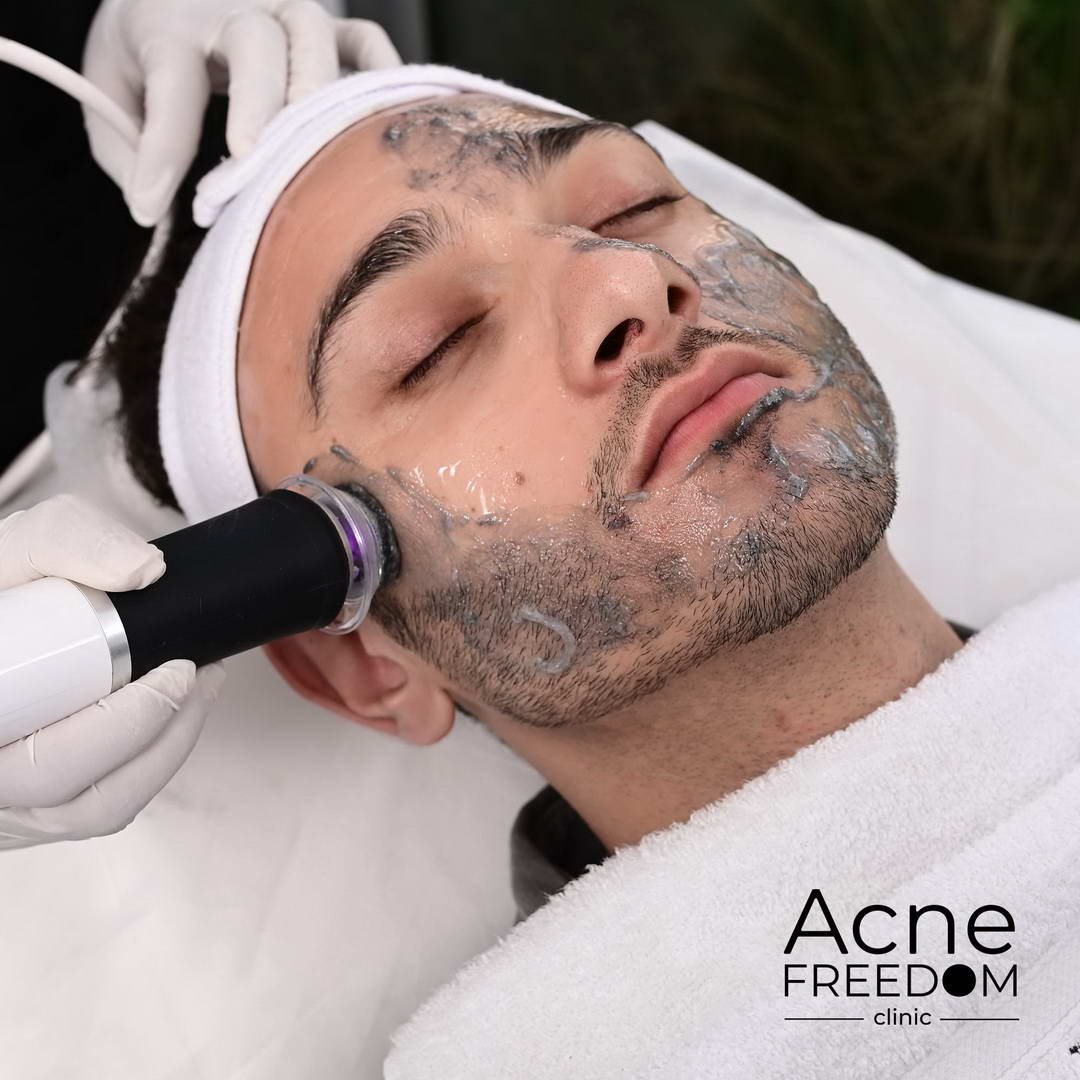
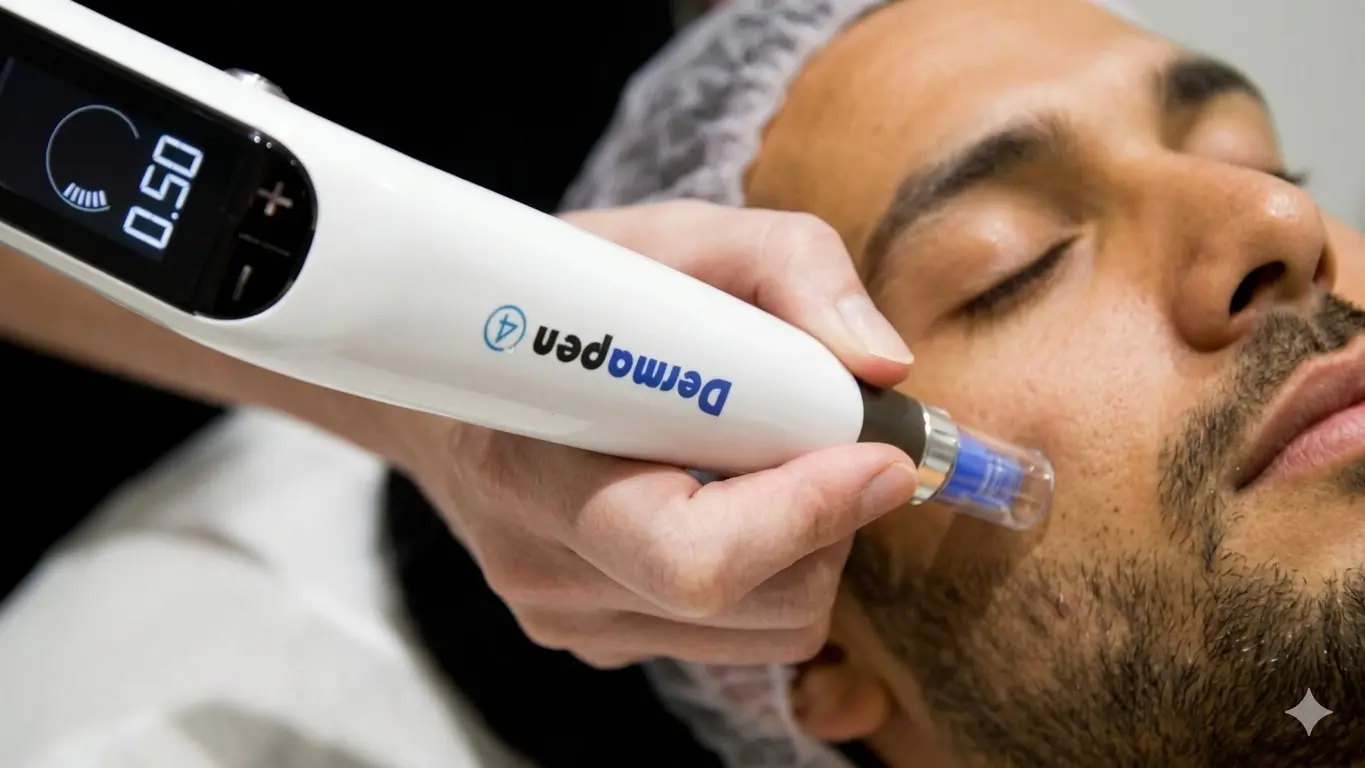
Dermapen 4 is a medical microneedling treatment that uses very fine needles to create controlled micro-channels in the skin. These controlled micro-injuries trigger the skin’s repair response and can support new collagen formation over time.[1,3]
At Acne Freedom Clinic, we usually consider Dermapen 4 for patients who want help with acne scars, visible pores, rough texture and selected post-acne skin changes, after a proper dermatologist assessment. It is not a one-size-fits-all treatment, and it works best when it is matched to the right scar pattern, skin behaviour and treatment sequence.
How does Dermapen 4 work for acne scars and skin texture?
When the needles move across the skin at a controlled depth, they create thousands of tiny channels. The skin responds with a wound-healing cascade that stimulates collagen and elastin remodelling. This is why microneedling is often called collagen induction therapy.[1,3,4]
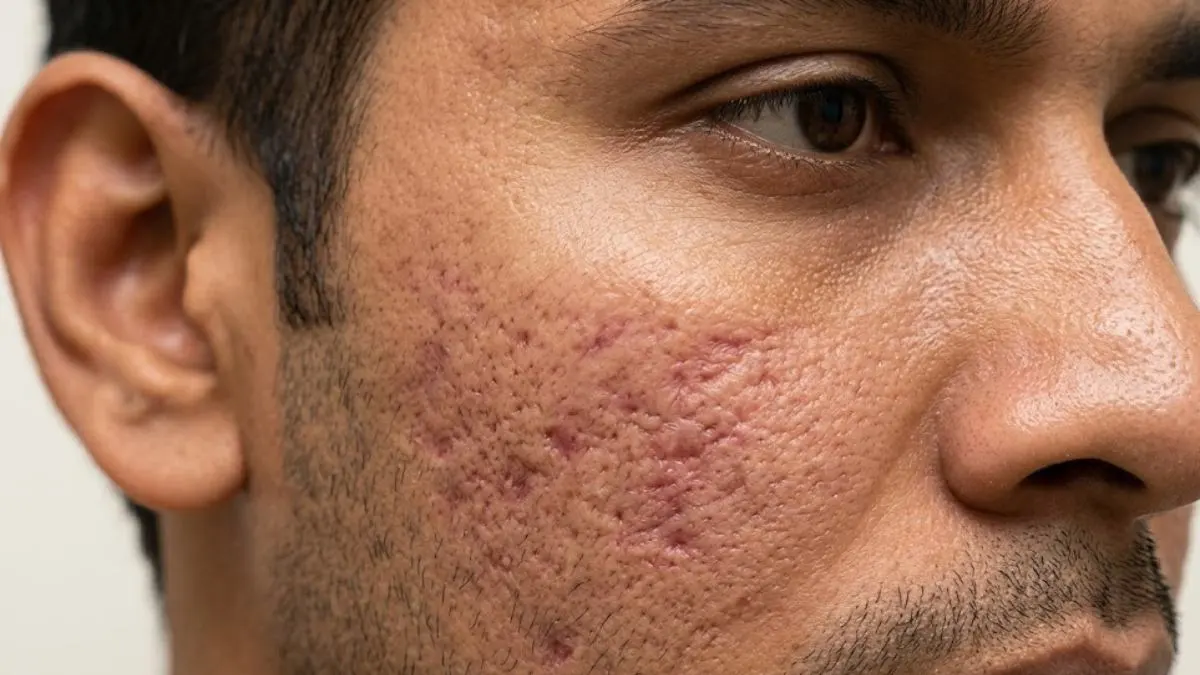
For acne scars, the goal is not to erase the scar in one sitting. The goal is gradual remodelling. Over a course of sessions, the skin may look smoother, certain depressed scars may soften, and texture may feel more even. Improvement depends on scar type, scar depth, skin tone, active acne status and whether combination treatment is also needed.[2,4,5]
What concerns can Dermapen 4 help with?
Acne scars
Dermapen 4 is commonly used for atrophic acne scars, especially when the concern is shallow to moderate textural scarring. Rolling scars and some boxcar scars may respond better than very deep ice-pick scars, which often need other procedures as well.[2,4]
At Acne Freedom Clinic, scar treatment planning starts with scar mapping. This matters because not every acne scar behaves the same way, and the safest, most efficient plan often combines more than one method.
Enlarged pores and rough texture
If your skin feels uneven after repeated breakouts, microneedling may help refine surface texture over time. Some patients also notice that pores appear less obvious after a series of sessions, especially when oiliness, congestion and recurring acne are being managed at the same time.[1,3]
Post-acne marks and uneven tone
Dermapen 4 is not our first-line treatment for every type of mark or pigmentation issue, but in selected cases it may support overall skin quality as part of a broader plan. When pigment behaviour is a major concern, we may prioritise acne control, skin barrier repair, peels, laser-based options or other approaches first, depending on your skin tone and history.
Early fine lines and overall skin quality
Microneedling is also used in aesthetic dermatology for general texture refinement and early fine lines. In an acne-focused clinic like ours, this is usually a secondary benefit rather than the main reason a patient comes in.
What are the main advantages of Dermapen 4?
Why many patients prefer Dermapen 4 over older microneedling methods?
- It is a clinic-based procedure with controlled depth and structured technique.
- It can be useful for acne scars, pores and texture with relatively short downtime for many patients.
- It is usually better tolerated than more aggressive resurfacing procedures.
- It can fit into combination plans rather than forcing a single-treatment approach.
- It is generally suitable across skin tones when performed carefully by trained dermatology professionals.[1,2]
Why it can suit Indian skin when protocols are chosen carefully?
Indian skin often has a higher tendency toward post-inflammatory hyperpigmentation if the skin is over-treated, treated too soon after sun exposure, or treated while still inflamed. Standard microneedling can be a practical option in Indian skin because it relies on controlled mechanical injury rather than aggressive surface ablation.[1,2,3]
That said, safety depends less on the device name and more on the protocol. We are careful about timing, acne activity, skin barrier status, aftercare, and whether your skin is likely to pigment after procedures.
Who is a good candidate for Dermapen 4?
Who may benefit most
- Patients with acne scars that are mainly shallow to moderate and atrophic, such as rolling scars or selected boxcar scars.
- Patients whose active acne is reasonably controlled and who are now more concerned about marks, pores or texture.
- Patients looking for a dermatologist-led treatment with modest downtime.
- Patients willing to follow sun protection and aftercare carefully.
- Patients who understand that results build gradually over a series of sessions, not overnight.[1,2,4]
When we may suggest waiting or choosing another treatment first
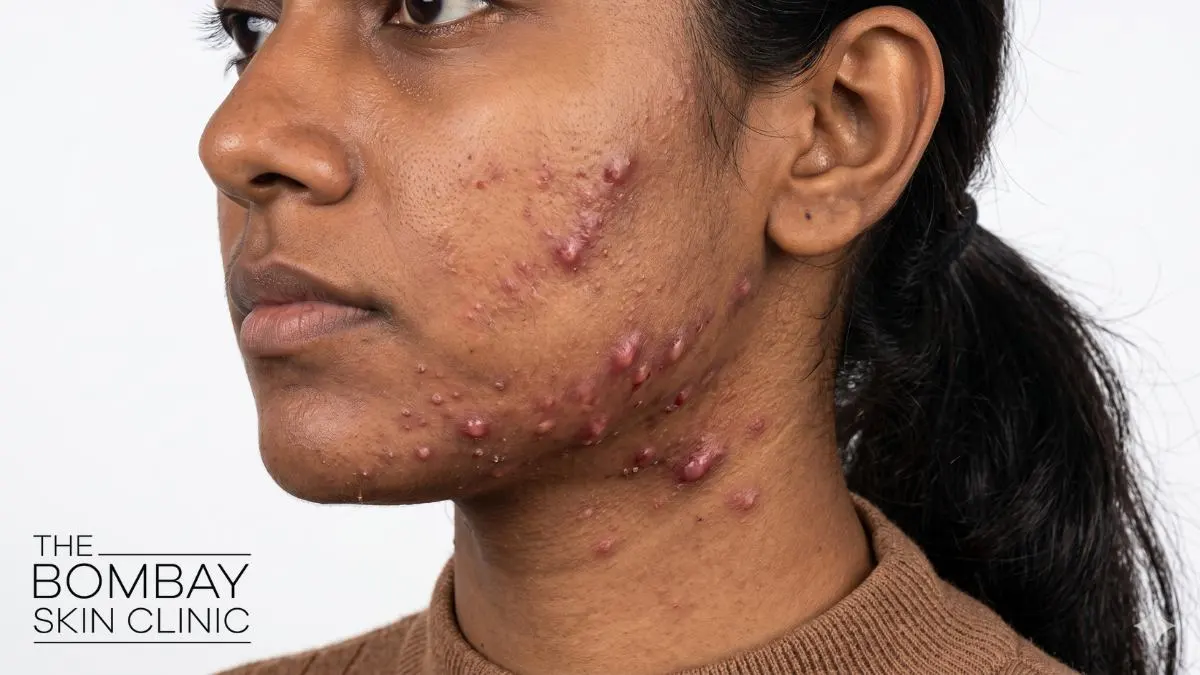
- If you still have frequent inflamed breakouts, painful cysts or ongoing acne flares.
- If your main issue is deep ice-pick scarring, tethered scars or mixed scar patterns that usually need combination procedures.
- If your skin is currently very irritated, over-exfoliated or sun-damaged.
- If you want the fastest possible change and are open to other treatments that may be more suitable for your scar type.
At Acne Freedom Clinic, we usually treat the acne problem before pushing scar procedures. This sequencing matters because treating scars while acne is still active can be frustrating and may not be the most efficient use of your time or budget.[2]
Who should avoid Dermapen 4, at least for now?
Active acne, infection, or inflamed skin
Microneedling should usually be delayed if you have painful acne lesions, visible infection, herpes, active dermatitis, fungal infection or broken, inflamed skin in the treatment area. Treating through active inflammation can increase irritation and risk.[1]
Pregnancy, certain medicines, and medical cautions
We may postpone the procedure during pregnancy and in other situations where elective procedures are better avoided. A detailed medicine and medical history is important, because certain medicines, healing issues and underlying conditions can change whether this is a good option for you.[1]
Skin barrier damage, recent sunburn, or recent procedures
- Recent strong sun exposure or sunburn
- Recent aggressive peels, lasers or other procedures before the skin has settled
- A history of keloids or problematic scarring in some cases
- Poor wound healing or significant immune compromise[1]
These do not always mean a permanent no. They often mean not right now. An in-clinic assessment helps decide whether the timing and the treatment are appropriate.
How many Dermapen 4 sessions are usually needed?
Typical session spacing
Many acne scar protocols use a series of sessions spaced a few weeks apart. A common range is 3 to 5 sessions, but not everyone needs the same number.[1,4]
How plans differ for mild, moderate, and deeper scars
- Mild textural change may need a shorter course.
- Moderate scarring usually needs a more structured series.
- Deeper or mixed scars often need multiple modalities rather than just more microneedling sessions.[2,4,5]
When add-on or combination treatments may be considered
Combination treatment is common in acne scar care. Depending on the scar map, we may discuss pairing or sequencing microneedling with procedures such as subcision, peels, laser-based treatments or platelet-rich fibrin in selected cases. This is because acne scars often involve more than one mechanism, and one tool rarely addresses all of them.[2,5]
Is there any downtime after Dermapen 4?
What your skin may look and feel like in the first 24 to 72 hours
Redness, warmth, mild swelling, tightness and a sunburn-like feel are common shortly after treatment. For many patients, these effects settle over the next few days, though the exact timeline varies.[1]
Some people also notice temporary dryness or flaking as the skin settles.
When you can return to work, social events, and workouts
Many patients return to routine work fairly quickly, but social downtime depends on how visible you want your skin to be. If you have an important event, it is sensible to plan treatment with a buffer rather than assume your skin will settle on the minimum timeline.
In practical terms, this is one reason many Mumbai patients like microneedling. It often fits more easily into a working schedule than more intensive resurfacing procedures.
What results can you realistically expect from Dermapen 4?
What may improve first
Texture, skin feel and overall smoothness are often the first changes patients notice. Some patients also feel that pores look less obvious and makeup sits better on the skin after a course of treatment.
What usually takes longer
True scar remodelling takes longer because collagen building is gradual. Deeper scars usually need patience, repeat sessions and often combination treatment rather than expecting a dramatic one-session change.[1,4,5]
Why scar type decides the result
This is the most important expectation point. Dermapen 4 can be a useful treatment for acne scars, but it does not behave the same way for every scar. Rolling scars, shallow boxcar scars and general textural roughness often respond better than sharply defined, deep ice-pick scars. That is why dermatologist scar classification is more useful than choosing a treatment based on social media or device popularity alone.[2]
Dermapen 4 vs other acne scar treatments, which is better?
Dermapen 4 vs derma roller
A clinic-grade microneedling pen offers more controlled treatment than a home derma roller. Depth control, sterile protocol and medical supervision make a major difference in both safety and outcomes. Home rolling can irritate the skin and may increase the risk of infection or pigmentation if done improperly.[1]
Dermapen 4 vs MnRF
Dermapen 4 uses mechanical microneedling alone. MnRF adds radiofrequency energy through the needles. For some patients with deeper acne scars, visible pores or added skin laxity, MnRF may offer an advantage because it combines mechanical injury with deeper thermal remodelling. For other patients, standard microneedling may be enough, especially when the goal is gentler textural support with less complexity.[1,2]
We do not treat this as a competition between devices. We choose based on scar type, skin tone, tolerance for downtime, budget and what else is happening in your acne journey.
Dermapen 4 vs fractional laser
Fractional lasers can be more intensive and may be helpful for selected scars, but they can also involve more downtime and a different pigment-risk profile, especially in Indian skin if the settings or candidate selection are not ideal. Dermapen 4 is often chosen when patients want a less intensive route, or when we are building a staged plan.[2,5]
Dermapen 4 vs chemical peels and PRF
Chemical peels are often more useful for active acne, superficial marks and excess oil. PRF is usually considered an adjunct rather than a replacement. Dermapen 4 focuses mainly on collagen induction and texture remodelling. In practice, these are not always alternatives. They are often parts of a sequenced plan.[2]
When is Dermapen 4 not enough on its own?
Rolling scars, boxcar scars, ice-pick scars, and mixed scars
Mixed acne scars are common. A patient may have rolling scars on the cheeks, a few boxcar scars, some ice-pick scars and post-acne marks at the same time. Using only one treatment for all of these is often inefficient.
Dermapen 4 may help one part of the problem, but deeper tethered scars may need subcision, sharply defined narrow scars may need targeted methods, and pigment may need a separate strategy.[2,5]
Why combination treatment may be more appropriate in some cases
This is where an acne-first clinic approach matters. We look at whether you still have active acne, whether your barrier is stable, whether marks are a bigger concern than scars, and whether a combination plan is likely to give a more realistic result. This protects patients from over-promising and under-treating.
For many patients, the best plan is not the fanciest treatment. It is the right sequence.
What is the indicative cost of Dermapen 4 at Acne Freedom Clinic?
For Acne Freedom Clinic, it is more responsible to give pricing after assessment rather than force a generic number onto every case. If you want a planning benchmark, Dermapen 4 at our clinic is commonly quoted as a procedure that may start from around Rs.5,000 per session, but exact cost depends on indication, area and treatment design. It is best treated as indicative, not final.
Frequently asked questions about Dermapen 4
Does Dermapen 4 help active acne or mainly acne scars?
Its more established role is in acne scars, texture and pores. In an acne clinic, we usually focus first on controlling active inflammatory acne, then shift toward scar and texture work once the skin is calmer.[2]
Is Dermapen 4 painful?
Most patients find it tolerable with numbing, though sensitive areas can still feel uncomfortable. The experience varies with the treatment depth, area and your own pain threshold.
Can Dermapen 4 make pigmentation worse?
It can if the skin is treated at the wrong time, with unsuitable intensity, or without proper aftercare. This is one reason Indian skin benefits from careful candidate selection and dermatologist-led treatment planning.
Can I do Dermapen 4 if I still get breakouts?
Sometimes yes, sometimes no. Occasional minor breakouts are different from ongoing inflamed acne. The decision depends on the pattern, severity and where the lesions are. We prefer to assess this in clinic rather than give a blanket answer online.
How soon can I wear makeup after Dermapen 4?
This depends on how your skin looks after the session and how quickly redness settles. We usually guide this based on your recovery rather than a one-rule-for-everyone timeline.
Is Dermapen 4 better than laser for acne scars?
Not universally. It may be a better fit for some scar patterns, some skin tones and some downtime preferences. For other patients, laser or a combination plan may be more appropriate. The better treatment is the one that matches your scar map and skin behaviour, not the one with the loudest marketing.
Citation sources
- American Academy of Dermatology Association. Microneedling can fade scars, uneven skin tone, and more. Available from: https://www.aad.org/public/cosmetic/scars-stretch-marks/microneedling-fade-scars
- American Academy of Dermatology Association. Acne scars: Consultation and treatment. Available from: https://www.aad.org/public/diseases/acne/derm-treat/scars/treatment
- Jaiswal S, Sharma YK. Microneedling in Dermatology: A Comprehensive Review of Applications and Techniques. Indian Dermatol Online J. Available from: https://pmc.ncbi.nlm.nih.gov/articles/PMC11499218/
- El-Domyati M, Abdel-Wahab H, Hossam A. Microneedling Therapy for Atrophic Acne Scars: An Objective Evaluation. J Clin Aesthet Dermatol. Available from: https://pmc.ncbi.nlm.nih.gov/articles/PMC4509584/
- Harris AG, Arrell K, Thng S. Skin needling as a treatment for acne scarring: An up-to-date review of the literature. Int J Womens Dermatol. Available from: https://pmc.ncbi.nlm.nih.gov/articles/PMC5418754/
MEDICALLY REVIEWED BY
Dr. Batul Patel (Dermatologist)
Medical Director – The Bombay Skin Clinic
Dr. Batul Patel is an award winning certified dermatologist, honoured as the “Dermatologist of the Year 2023” at the national level by The Economic Times. View profile