

MEDICALLY REVIEWED BY
Dr. Batul Patel (Dermatologist)
Medical Director – The Bombay Skin Clinic
Dr. Batul Patel is an award winning certified dermatologist, honoured as the “Dermatologist of the Year 2023” at the national level by The Economic Times. View profile
What is Spectra® XT Toning?
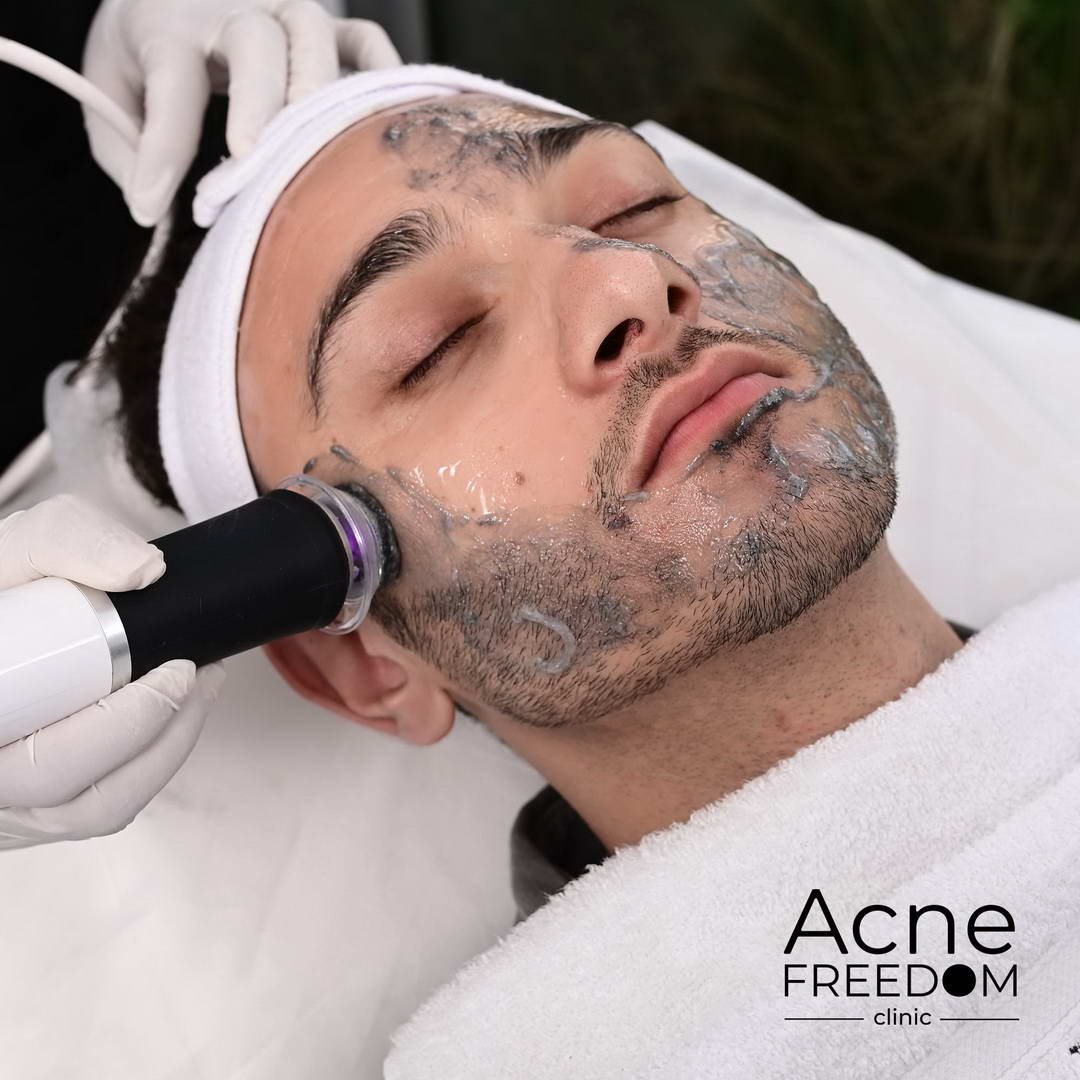
Spectra® XT Toning is a dermatologist-delivered laser approach that is commonly used to support the management of uneven tone, selected pigmentation concerns, and some post-acne marks. In practice, it sits within the wider family of low-fluence Q-switched Nd:YAG laser toning, a category that has been studied most extensively for melasma and other pigment concerns, especially in skin of colour.[1][2][3]
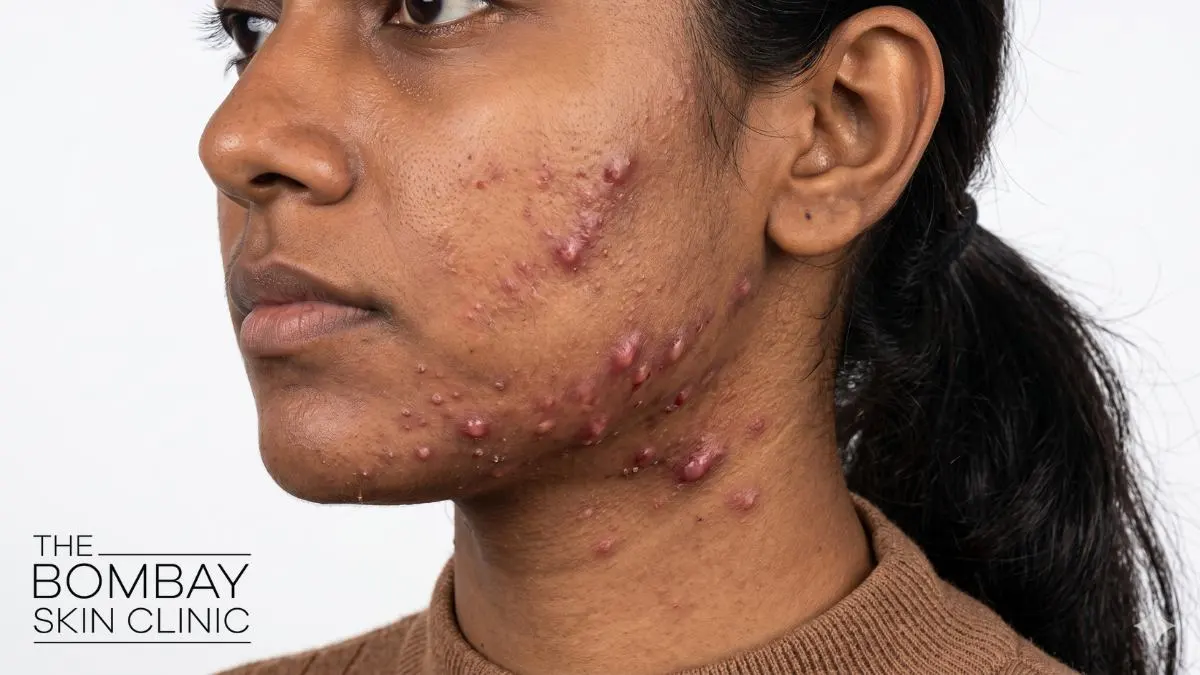
At Acne Freedom Clinic, we usually frame it as one possible part of a treatment plan, not a one-size-fits-all answer. Many patients in Mumbai say “marks” when they may actually have a mix of brown post-acne pigmentation, lingering redness, active acne, textural scarring, tanning, or melasma. These concerns do not all respond to the same treatment.
How does Spectra® XT Toning work on the skin?
Laser toning uses very short pulses of light energy to target excess pigment more selectively than the surrounding skin. In low-fluence settings, the goal is controlled, gradual improvement over a series of sessions rather than an aggressive single sitting. This “slow and steady” approach is one reason the treatment has remained relevant in Asian skin and other darker skin tones, where inflammation and post-inflammatory hyperpigmentation need to be considered carefully.[1][3]
If the concern is mainly pigment, laser toning may help gradually. If the concern is deeper textural scarring, enlarged pores, or rolling acne scars, another modality may be more useful. This is why an in-clinic skin assessment matters before choosing the device settings, or even deciding whether Spectra® XT Toning is the right fit.
What skin concerns can Spectra® XT Toning help with?
Post-acne marks and uneven tone
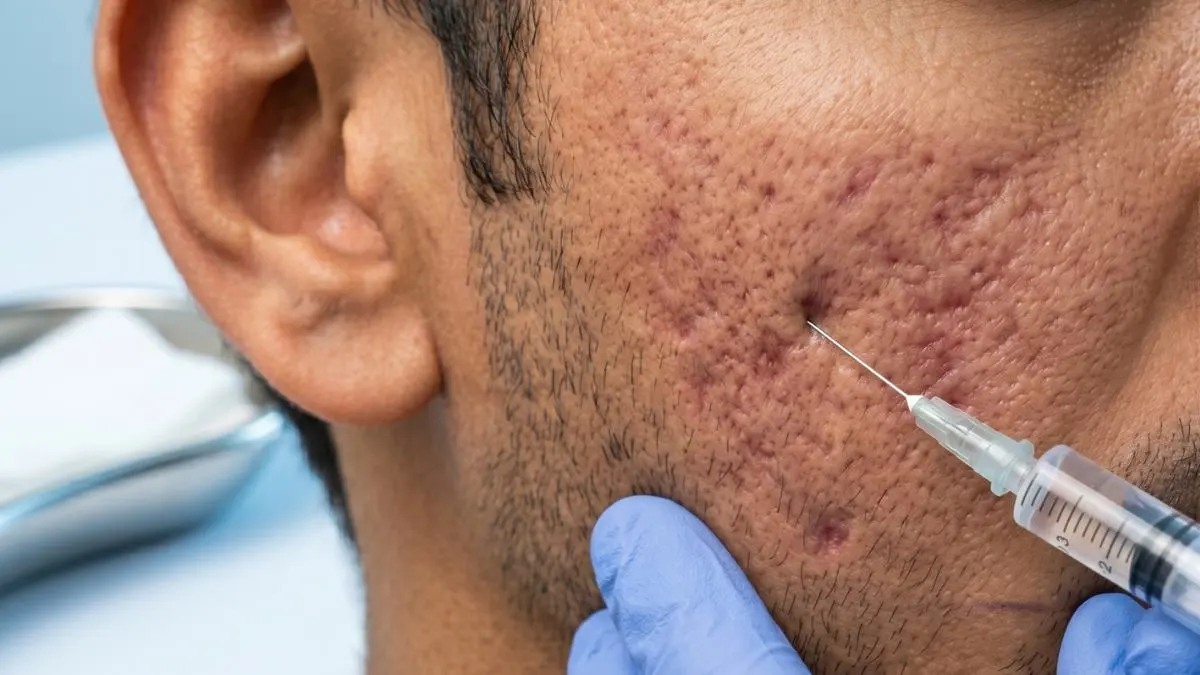
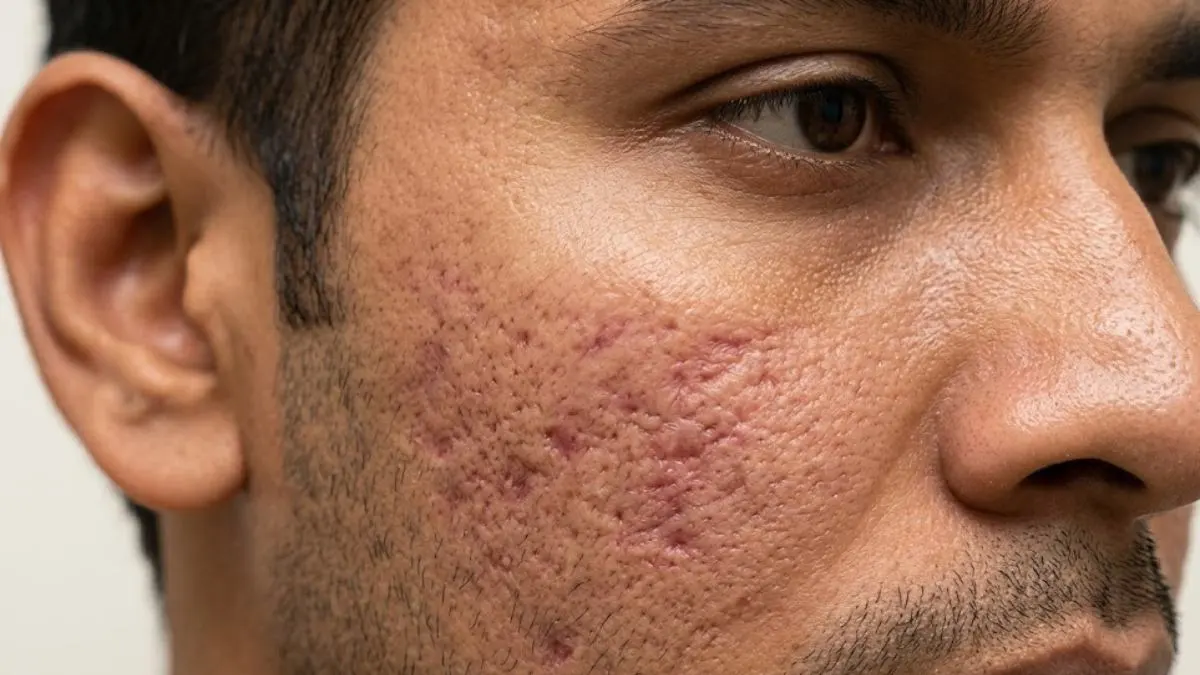
For patients whose breakouts have settled but left behind patchy brown marks, Spectra® XT Toning may be used as a supportive treatment to gradually improve visual unevenness. It is often considered when the skin looks blotchy after acne, especially when the patient wants a low-downtime option and the skin has to be handled gently. The improvement is usually progressive, not instant.
Post-acne redness and lingering inflammation
Some patients do not have brown marks at all. They have pink or red residual changes after inflamed acne, and these can persist for weeks or months. In selected cases, Spectra® XT based protocols may be considered as an adjunct for lingering redness, but suitability depends on what exactly is causing the redness and whether acne is still active. This is one area where diagnosis matters more than internet advice.
Selected pigmentation concerns in Indian skin
Laser toning has been studied most strongly in melasma, especially in Asian populations, but the evidence also shows an important limitation. Melasma is complex, recurrence is common, and laser toning should usually sit within a broader plan rather than as a stand-alone promise.[1][2][3][5][6]
Dullness and overall skin clarity
Some patients seek Spectra® XT Toning because the skin looks tired, uneven, or less clear rather than sharply pigmented. In those cases, the role of treatment is usually to support a more even look over time.
What are the advantages of Spectra® XT Toning?
Low-downtime option for busy Mumbai patients
One practical advantage is that laser toning is usually planned as a low-downtime treatment. Many patients can return to desk work, indoor routines, and normal social activity quickly, with only mild temporary redness or warmth if it occurs. That can make it easier to fit into a Mumbai workweek, especially for people who cannot take recovery-heavy appointments frequently.
Suitable for carefully selected Indian skin tones
Low-fluence Q-switched Nd:YAG toning became widely used in Asia partly because clinicians needed approaches that could be tailored more carefully for darker skin tones.[1][3] That does not mean it is risk-free. It means the method can be adapted thoughtfully when used for the right indication and skin type.
Can be combined with a larger acne or pigmentation plan
Spectra® XT Toning is often most useful when it is not expected to do everything alone. A patient with acne marks may also need acne control, sunscreen discipline, barrier repair, treatment of melasma triggers, or another procedure for scars. When the sequence is planned properly, the overall result tends to look more coherent than when one laser is expected to solve every concern.[1][5][6]
Short sessions with gradual, realistic improvement
Sessions are usually relatively short, and the improvement tends to build gradually over multiple sittings. For the right patient, that balance of convenience and control can be appealing. It also supports realistic counselling, which matters in pigment-prone skin, where more aggressive treatment is not always better.
Who is a good candidate for Spectra® XT Toning?
Who may benefit most?
- Patients with selected superficial or mixed pigmentation concerns who want a dermatologist-led, low-downtime option.
- People dealing with post-acne marks or uneven tone, once the skin has been assessed and the mark type is clearly identified.
- Patients who understand that a series of sessions is usually needed and that results can be gradual rather than dramatic.
Who may need a different treatment first?
- Patients with ongoing active acne may first need the breakouts brought under better control. Treating marks while new lesions keep appearing is often inefficient.
- People with deeper textural acne scars, tethered scars, or marked pore changes may respond better to treatments such as microneedling radiofrequency or other scar-focused options.
- Patients whose pigmentation is actually melasma may need a broader plan built around diagnosis, triggers, home care, and long-term maintenance, because recurrence is common.[1][2][3][6]
Who should postpone or avoid treatment?
- Anyone with a recent tan, current sunburn, irritated skin barrier, or active infection in the treatment area should usually wait.
- Patients with a history of easy post-inflammatory pigmentation, unusual healing responses, or recent procedures on the same area need careful review before treatment.
- Pregnancy, breastfeeding, photosensitising medicines, and medical conditions that change healing or light sensitivity should be discussed directly with the treating dermatologist before planning sessions.
How many Spectra® XT Toning sessions are usually needed?
Typical session spacing
Most patients need a course, not a single sitting. In the laser toning literature, treatments are often delivered weekly or every two weeks over multiple sessions, and some studies describe around ten sessions in melasma-focused protocols.[2][3] In real practice, spacing is personalised.
When maintenance may be discussed?
Maintenance is more likely to come up when the underlying condition is chronic or relapse-prone, especially melasma. This is not a failure of treatment. It reflects the biology of pigment disorders, which can flare again with sun, heat, hormones, friction, or inflammation.[1][4][6]
Why your plan may vary?
A patient with mild post-acne pigmentation may need fewer sessions than someone with longstanding, mixed-pattern facial pigmentation. Another patient may look like a laser toning candidate at first glance but actually need better acne control or scar-focused treatment instead. That is why session numbers on social media can be misleading when copied from one face to another.
Is there any downtime after Spectra® XT Toning?
What you may notice in the first 24 to 72 hours?
The common short-term experience is usually mild, such as temporary redness, warmth, slight dryness, or a feeling that the skin is a little more reactive for a day or two. Even “minimal downtime” does not mean “no care needed.” Skin that has just had an energy-based procedure should be treated gently.
When you can return to work, social plans and exercise
Most patients can go back to work quickly, especially if the treatment is conservative and the skin was calm to begin with. We still advise practical judgement. If your skin tends to flush with heat, heavy workouts, steaming, or long outdoor commutes in the Mumbai sun, it may help to keep things lighter for a short period after the session.
Sun protection and skincare after treatment
Sun protection is not a side note, it is part of the treatment logic. Pigment-prone skin can relapse or darken again when UV and visible light exposure are not controlled well.[4][6] We usually advise a gentle routine and disciplined sunscreen use, especially because many patients seeking laser toning already have a history of recurrent marks or tanning.
What results can you realistically expect, and when?
Early changes you may notice
Some patients notice the skin looks a little more even or less dull after the first few sessions. Others see no meaningful early change. With pigment treatments, steady reduction over time is a more reliable expectation than immediate transformation.
Results that take a series of sessions
Most meaningful changes, especially in melasma or long-standing uneven tone, are usually judged after a course of treatment rather than after one appointment.[2][3][5] Even then, results vary. The skin may improve, plateau, or need a change in strategy. This is why we position Spectra® XT Toning as a supportive tool within a dermatologist-led plan, not as a guaranteed answer.
Why recurrence or maintenance may matter in pigmentation-prone skin?
Pigment disorders are influenced by sunlight, visible light, hormones, inflammation, heat, and skin sensitivity. That is why recurrence remains common even after improvement.[1][4][6] In acne-prone patients, new breakouts can create fresh marks. In melasma-prone patients, one summer of inconsistent sun protection can undo months of work. Realistic treatment planning includes this reality from day one.
Spectra® XT Toning vs other laser and clinic options, how does it compare?
Spectra® XT Toning vs carbon laser peel
A carbon laser peel is usually chosen when the priority is oiliness, surface refresh, or a more immediate “cleaner skin” feel. Spectra® XT Toning is generally the better fit when the concern is more about pigment pathways and gradual tone correction. The two are related in the laser family, but the treatment goal is not identical.
Spectra® XT Toning vs chemical peels
Chemical peels can be helpful for superficial pigmentation, acne, and textural roughness, especially when selected carefully for Indian skin. Spectra® XT Toning may be preferred when a patient wants a device-based option with controlled low-fluence energy and limited visible peeling. In some cases, the better answer is not “either-or” but a planned sequence.
Spectra® XT Toning vs microneedling or MNRF
If the main issue is atrophic acne scarring, tethering, or deeper textural irregularity, microneedling-based treatments or MNRF are often stronger contenders because they target dermal remodelling rather than mainly pigment. Spectra® XT Toning may still have a role if the patient also has surface marks or uneven tone, but it is not the first answer for every scar.
Spectra® XT Toning vs stronger pigment-focused laser options
More aggressive laser choices are not automatically better for Indian skin. In pigment-prone patients, a lower-downtime, lower-aggression approach can sometimes be the safer starting point. Stubborn or mixed-pattern pigmentation may still need a different laser, or a combined approach, depending on depth and diagnosis.[1][5][6]
When is Spectra® XT Toning the better choice, and when is it not?
It is usually the better choice when the target problem is selected pigmentation or uneven tone, the patient wants limited downtime, and the skin needs a cautious, buildable approach. It may also make sense when the patient is willing to commit to a course of sessions and maintain sun protection properly.
It is usually not the best stand-alone choice when the main concern is deep scarring, ongoing active acne without control, or complex pigmentation that has not been diagnosed properly. In those cases, starting with the wrong treatment can waste time, money, and patience. At Acne Freedom Clinic, we would rather redirect the plan than oversell the laser.
What is the indicative cost of Spectra® XT Toning at Acne Freedom Clinici?
The cost of Spectra® XT Toning in Mumbai can vary based on the concern being treated, the area covered, whether it is a standalone session or part of a broader acne or pigmentation plan, and how many sittings are likely to be needed. Because of that, a meaningful estimate is best given after assessment rather than as a generic number online.
Frequently asked questions about Spectra® XT Toning in Mumbai
Is Spectra® XT Toning good for acne marks?
It can be helpful for selected post-acne marks, especially when the issue is uneven tone or residual pigmentation. It is less likely to be the main answer for deeper textural scars. At consultation, we first identify whether your “marks” are brown, red, depressed, raised, or mixed, because the best treatment depends on that distinction.
Can Spectra® XT Toning help with post-acne redness?
In selected patients, it may be used as a supportive option for lingering post-acne redness. But not all redness is the same, and some cases need acne control, rosacea assessment, barrier repair, or another modality. It is best viewed as one possible tool after proper diagnosis.
Is Spectra® XT Toning painful?
Most patients describe it as tolerable, with mild snapping, warmth, or tingling rather than severe pain. Comfort varies with the settings used, the area treated, and individual skin sensitivity. If your skin is reactive, we factor that into the plan.
How many sittings of Spectra® XT Toning will I need?
Usually a course of sessions is needed rather than a one-off appointment. The number depends on what is being treated, how long it has been present, and how your skin responds. Melasma and recurrent pigmentation often need a longer-term mindset than simpler post-acne marks.[2][3][6]
Can Spectra® XT Toning worsen pigmentation?
It can if the case selection is poor, the skin is recently tanned or inflamed, or the treatment is too aggressive for the skin type. This is one reason dermatologist oversight is important in Indian skin. We would rather postpone, prep, or choose another modality than push ahead carelessly.[1][3][5]
Can I combine Spectra® XT Toning with my acne treatment plan?
Often, yes, but combination plans need sequencing. If acne is still active, we may first focus on getting the breakouts steadier before moving toward marks. In many acne journeys, the smartest plan is a staged one rather than trying to treat everything at once.
Sources
- Sarkar R, Ailawadi P, Garg S, Mysore V. Lasers in Melasma: A Review with Consensus Recommendations by Indian Pigmentary Expert Group. J Cutan Aesthet Surg. https://pmc.ncbi.nlm.nih.gov/articles/PMC5724305/
- Shah SD, Aurangabadkar SJ. Laser Toning in Melasma. J Cutan Aesthet Surg. https://pubmed.ncbi.nlm.nih.gov/31413475/
- Lee YS, Lee JH, Na JI, Choi JW. The Low-Fluence Q-Switched Nd:YAG Laser Treatment for Melasma: A Systematic Review. Medicina (Kaunas). https://pmc.ncbi.nlm.nih.gov/articles/PMC9323185/
- American Academy of Dermatology Association. Melasma: Diagnosis and treatment. https://www.aad.org/public/diseases/a-z/melasma-treatment
- Jiryis B, Vora RV, Goldust M. Management of Melasma: Laser and Other Therapies, Review and Update. J Clin Med. https://www.mdpi.com/2077-0383/13/5/1468
- Kumar D, Sood R, Tiwari P. Melasma management: Unveiling recent breakthroughs through literature analysis. Health Sci Rev. https://www.sciencedirect.com/science/article/pii/S2772632025000054
MEDICALLY REVIEWED BY
Dr. Batul Patel (Dermatologist)
Medical Director – The Bombay Skin Clinic
Dr. Batul Patel is an award winning certified dermatologist, honoured as the “Dermatologist of the Year 2023” at the national level by The Economic Times. View profile