
MEDICALLY REVIEWED BY
Dr. Batul Patel (Dermatologist)
Medical Director – The Bombay Skin Clinic
Dr. Batul Patel is an award winning certified dermatologist, honoured as the “Dermatologist of the Year 2023” at the national level by The Economic Times. View profile
What is bacne?
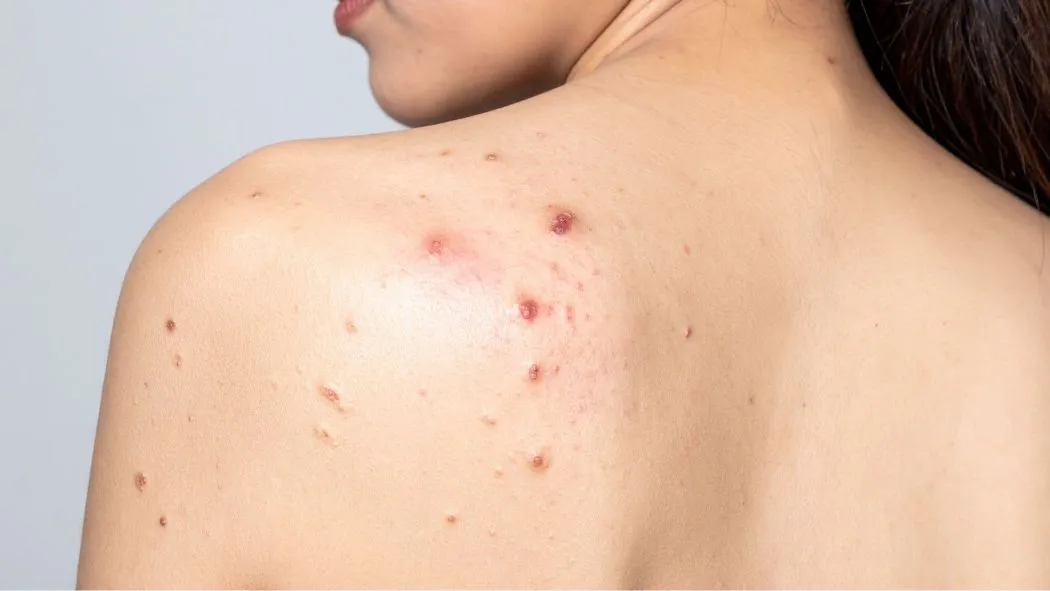
Bacne is the common name for acne that appears on the back. It can also extend to the shoulders and upper chest. Like facial acne, bacne can show up as clogged pores, red bumps, pus-filled spots, deeper painful lesions, and the marks they leave behind. [1,2]
The back has many oil glands, so breakouts here can be persistent. Bacne is also often ignored until it starts leaving marks. [2,3]
Why does bacne happen on the back, shoulders and chest?
Bacne develops through the same broad processes that drive acne elsewhere, oil production, clogged pores, inflammation, and bacterial overgrowth. On the trunk, friction, occlusion, and sweat can make it worse. [1,2]
In Mumbai, humidity, commuting, gym wear, backpacks, and hair products touching the upper back can all add to this pattern. [2,4]
What does bacne look like, and how is it different from facial acne?
Bacne may look like small rough bumps, blackheads, whiteheads, red inflamed pimples, or deeper tender lumps. Some people mainly notice scattered spots after sweating. Others have larger clusters across the whole back.
Truncal skin is not exactly the same as facial skin. The back is thicker, more covered, and more exposed to friction, which is one reason treatment often needs a structured plan. [2,5]
What are the common triggers for bacne in Mumbai?
Some triggers are common across all locations, but a few become especially relevant in Mumbai because of heat, humidity, and lifestyle habits.
- Heavy sweating, especially after gym sessions, sports, or long travel days
- Tight activewear, shapewear, uniforms, or bra straps that create friction
- Oil-based hair products, conditioners, or leave-in products touching the back
- Delayed showering after sweat and repeated occlusion under clothing
- Stress, sleep disruption, and picking at active lesions
These factors do not explain every case. Bacne is a skin condition, not just a hygiene issue. [1,2]
What are the advantages of treating bacne early?
Fewer active breakouts
Early treatment can reduce repeated clogging and inflammation before the back becomes constantly active. [1,4]
Lower risk of marks and scars
Truncal acne can leave brown marks, red marks, and in some cases textural scars or thicker scars. Earlier control matters because repeated inflammation raises that risk. [2,6]
Better comfort in daily life, workouts and clothing choices
Better control can make daily routines, workouts, and occasion wear easier to manage.
More controlled, dermatologist-led treatment planning
An early assessment helps match the plan to your acne type, skin sensitivity, and mark risk. [1,4]
Better long-term skin maintenance
Maintenance becomes more realistic once active acne is better controlled. Bacne usually improves in stages. [1,2]
Who is a good candidate for bacne treatment?
People with mild, moderate or stubborn body acne
If you keep getting breakouts on the back, shoulders, or upper chest despite basic skin care, an in-clinic plan may help. More severe cases may need escalation. [1,4]
People getting repeated breakouts on the back, shoulders or chest
Repeated recurrence is a valid reason to seek treatment. Persistent body acne can lead to marks over time. [2]
People with bacne marks or early textural changes
Some patients have marks after acne settles. Others have both active lesions and post-acne changes. These cases often need sequencing, with active acne stabilised first. [2,6]
People preparing for events, holidays or back-baring clothing
This is common before weddings, vacations, festive wear, or shoots. The key is to start early because body acne and its marks rarely settle in just a few days.
Who may need extra caution or a different plan?
People with severe nodulocystic acne or widespread inflammation
Large painful lesions, rapidly spreading acne, or acne that is already scarring needs a dermatologist-led review first. Here, procedures may be supportive, not the whole plan. [1,4]
People with very sensitive or compromised skin
If your skin barrier is already irritated, reactive, peeling, or inflamed from self-treatment, the first step may be calming the skin rather than jumping straight into procedures.
People who are pregnant, breastfeeding or on certain medicines
Some acne treatments and procedure combinations may not be appropriate in these situations. [4]
People with active skin infection, open wounds or recent tanning
Procedures may need to be postponed if the skin has active infection, open lesions from picking, sunburn, or recent aggressive exposure. Safety comes before speed. [4]
How do we assess bacne at Acne Freedom Clinic?
Acne type and severity
We first look at what is actually present, clogged pores, inflamed lesions, deeper bumps, marks, or early scarring. This matters because not every rough bump on the back is treated the same way.
Body area involved and mark or scar risk
The pattern across the upper back, shoulders, or chest helps guide the treatment plan. We also assess how easily your skin develops dark marks, which is especially relevant in Indian skin tones. [2,6]
Trigger review, sweat, friction, gym wear, hair products and routine
Body acne often has lifestyle amplifiers. Your consultation includes practical trigger review so that treatment is not working against your routine every week.
Skin type, previous treatments and lifestyle factors
We also consider sensitivity, product tolerance, picking, travel, work schedule, and how much downtime is realistic. This helps build a plan that patients can actually follow.
How does bacne treatment work?
Bacne treatment works by reducing pore blockage, lowering inflammation, controlling recurring breakouts, and then addressing marks if needed. Depending on severity, that may involve home care, dermatologist-led medical support, in-clinic procedures, or a combination. [1,4,5]
For many patients, active acne needs control first. Once the skin is quieter, attention can shift to pigmentation or texture. [2,6]
Which bacne treatment options may be used in clinic?
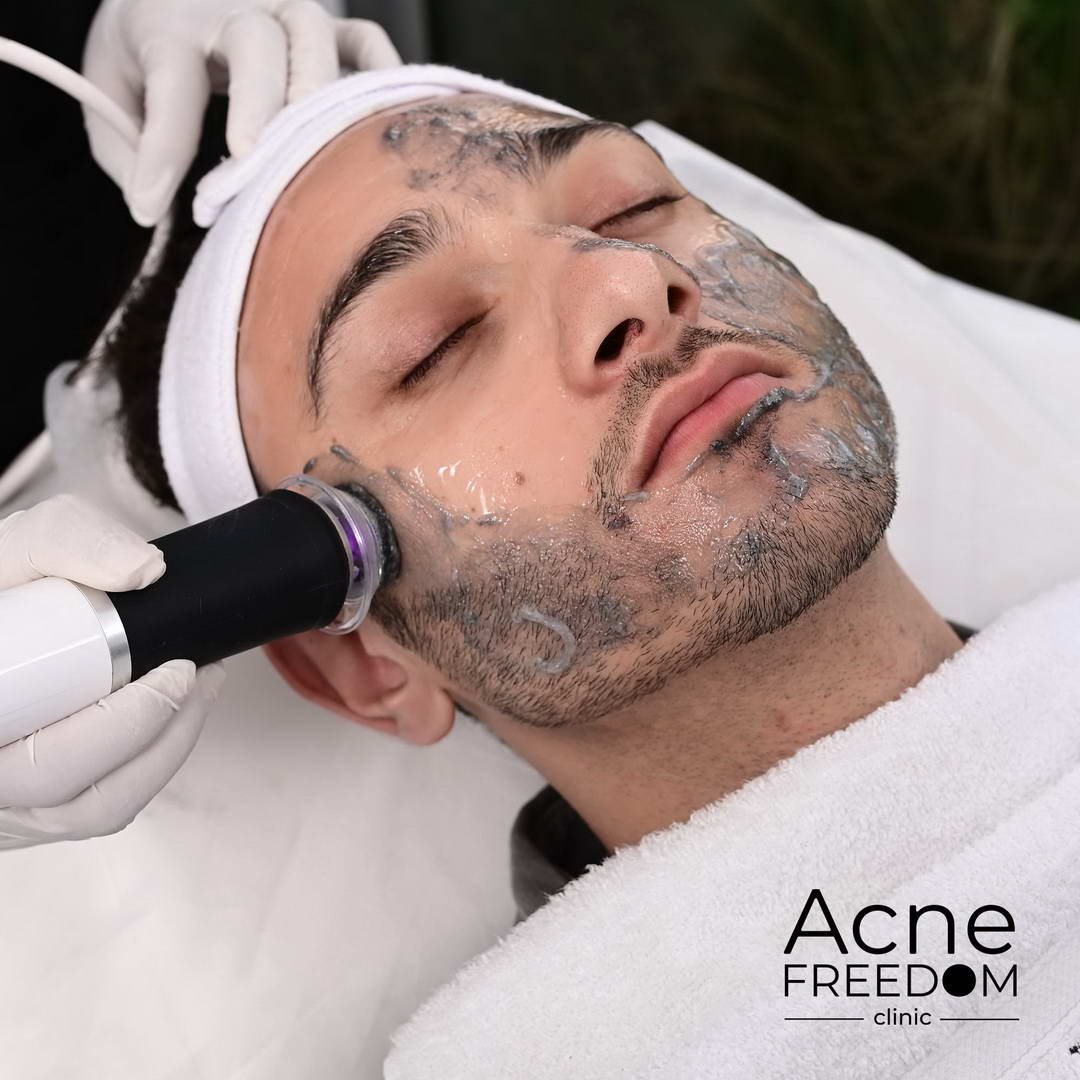
Chemical peels for body acne
Chemical peels are one option for suitable cases of back and shoulder acne. They may support exfoliation, reduce congestion, and help with post-acne marks in selected patients. Timing matters. [4,5]
Acne facials and deep cleansing support treatments
Supportive in-clinic care may help selected patients with congestion, oiliness, or maintenance between higher-intensity treatments.
Prescription-led acne care under dermatologist supervision
For more inflamed, persistent, or widespread bacne, a medical plan may be needed. Guidelines support treatment matched to severity and aim to limit unnecessary antibiotic exposure. [1,4]
Laser or light-based options, where suitable
In some cases, device-based treatment may be used as an adjunct for oiliness, inflammation, or post-acne changes. Evidence for physical modalities in acne is mixed, so these options are best positioned as supportive rather than universal first-line care. [1,4]
Treatment for post-acne marks and texture, if needed
If active bacne has already started leaving marks or texture changes, the plan may later include targeted work for pigmentation and surface irregularity. Marks are usually addressed after active acne is more controlled. [2,6]
What is the bacne session plan and how comfortable is it?
Typical session duration
Because the treatment area is larger, bacne sessions often take around 30 to 60 minutes. Timing varies by area treated and whether multiple steps are combined.
How often sessions are usually scheduled
Many body acne protocols are spaced every few weeks. The interval depends on your skin response, the treatment used, and whether the focus is active acne or post-acne marks.
How many sessions may be needed
A course often involves multiple sessions, not one visit. Visible change usually builds across the treatment plan. [2,4]
What the treatment feels like
Comfort depends on the procedure. Many patients describe peels and supportive acne treatments as manageable, with temporary warmth, tingling, or mild stinging.
Aftercare for the first 24 to 72 hours
Aftercare is usually simple. You may be advised to avoid harsh scrubbing, friction, very sweaty activity for a short period, and untested body products until the skin settles.
Is there any downtime after bacne treatment?
What you can usually return to the same day
For many low to moderate intensity procedures, patients can return to regular daily activity the same day, though temporary redness or sensitivity can happen.
What to avoid after sessions?
It is usually sensible to avoid heat-heavy workouts, friction from tight clothing, aggressive exfoliation, and picking at the area while the skin is settling. Sun protection remains important for exposed areas, especially if marks are a concern. [4]
When to plan around weddings, travel or beachwear
If you are treating bacne before an event, build in enough buffer. This allows time for the skin to respond before a wedding, shoot, or holiday.
Is bacne treatment safe?
Dermatologist oversight and skin-type appropriate protocols
Bacne treatment can be safe when the diagnosis is right and the plan is matched to the skin, the severity, and the patient’s lifestyle. Indian skin tones also need thoughtful planning because post-inflammatory pigmentation can linger after overly aggressive treatment. [4,6]
Hygiene and sterilisation standards
At Acne Freedom Clinic, bacne care is planned under dermatologist oversight with hygiene-focused protocols and procedure decisions based on the condition of your skin on the day of treatment.
Common temporary side effects
Temporary redness, dryness, mild peeling, irritation, and short-term sensitivity can happen with many acne treatments. Risk varies with the procedure and the baseline health of your skin. [1,4]
When treatment needs to be postponed
We may delay treatment if there is active skin infection, heavy recent sun exposure, open wounds, severe irritation from self-treatment, or if your current medical context makes a planned procedure unsuitable.
What are the contraindications for bacne treatment?
Contraindications depend on the treatment chosen, but common caution points include:
- Active infection, open wounds, or significant broken skin in the treatment area
- Recent tanning or sunburn over the back and shoulders
- Known allergy or poor tolerance to a planned product or procedure step
- Pregnancy or breastfeeding, depending on the treatment pathway
- Current medicines or skin conditions that increase irritation risk
Because body acne can range from mild congestion to deeper inflammatory disease, contraindications are best reviewed in person. [1,4]
When will I start seeing results from bacne treatment?
Early changes
Early signs of improvement may include less oiliness, fewer fresh breakouts, and skin that feels less congested. Timing varies by severity and consistency. [1,4]
Results over the treatment course
More meaningful improvement usually builds across a treatment course rather than appearing after one session. This is particularly true for the back. [2,5]
What to expect for marks and uneven texture
Marks often take longer than active acne to fade. Textural change can take longer still. In many cases, active bacne, marks, and texture need to be handled in sequence, not all at once. [2,6]
Why maintenance matters
Bacne can return if underlying triggers continue or if acne-prone skin is left without maintenance. Maintenance does not always mean something intensive, but it does usually mean staying consistent with the plan that suits your skin. [1,2]
Can bacne come back?
Yes, it can. Acne is a chronic tendency for many people, and the back is especially vulnerable to recurrence because of sweat, friction, and product build-up. A good treatment plan aims to reduce flare frequency and severity, but relapse prevention is usually part of long-term care. [1,2,4]
Chemical peels vs laser for bacne, which is better?
Neither is automatically better for every patient. Chemical peels may be considered when congestion, surface roughness, and post-acne marks are part of the picture. Laser or light-based options may be considered in selected cases. [1,4]
The better choice depends on whether your main issue is active acne, congestion, pigmentation, or early textural change. Sometimes the answer is the right sequencing of treatments.
Bacne treatment vs acne scar treatment, what is the difference?
Bacne treatment focuses on active disease, reducing new lesions, calming inflammation, and lowering the chance of fresh marks and scars. Acne scar treatment focuses on what remains after active acne settles, such as uneven texture or persistent discolouration. [2,6]
Usually, the skin does better when active acne is brought under control first.
What is the price of bacne treatment at Acne Freedom Clinic?
Cost varies with the size of the area treated, the severity of active acne, whether the focus is breakouts or marks, and the type of treatment selected.
As an indicative price; bacne treatment can start from around ₹3,500 per session for selected in-clinic treatments, but the right plan can only be quoted after assessment. Back acne is easy to underestimate online. A consultation helps determine whether you need maintenance support, a structured procedure course, medical control, or a staged combination plan.
FAQs about bacne treatment
What is the best treatment for bacne?
The best treatment depends on whether you have clogged pores, inflamed acne, deeper lesions, marks, or a mix of these. A dermatologist-led assessment is the safest way to decide. [1,4]
How many sessions does bacne treatment need?
There is no fixed number for everyone. Many patients need a course of sessions spaced across several weeks, and some also need maintenance.
Does bacne treatment help with dark marks on the back?
It can help, but marks usually improve more slowly than active acne. If pigmentation is your main concern, the plan may need to shift once active lesions are better controlled. [2,6]
Is bacne treatment painful?
Most patients describe it as manageable, though comfort varies by procedure and skin sensitivity. Temporary warmth, stinging, or mild irritation can happen.
Can gym workouts make bacne worse?
They can worsen bacne in some people, mainly because of sweat, friction, and tight clothing rather than exercise itself. [2]
Should I see a dermatologist for bacne or try products first?
If bacne is mild and recent, a sensible body acne routine may be reasonable to try. But if it is painful, leaving marks, spreading, recurring, or not improving, it is worth seeing a dermatologist. [1,4]
Citation Sources
- Reynolds RV, Yeung H, Cheng CE, et al. Guidelines of care for the management of acne vulgaris. J Am Acad Dermatol. 2024. https://pubmed.ncbi.nlm.nih.gov/38300170/
- Woo YR, Tan JKL, Hsu CK, et al. Truncal Acne: An Overview. J Clin Med. 2022. https://pmc.ncbi.nlm.nih.gov/articles/PMC9267677/
- Indian Association of Dermatologists, Venereologists and Leprologists. Acne. https://public.iadvl.org/acne
- National Institute for Health and Care Excellence. Acne vulgaris: management. https://www.nice.org.uk/guidance/ng198
- Issa N, Tan J. Update on Truncal Acne: A Review of Treatments for the Dermatologist. Dermatol Ther (Heidelb). 2022. https://pubmed.ncbi.nlm.nih.gov/36468963/
- Daniele SG, Nikiforova M, Vassilenko K, et al. Truncal Acne and Scarring: A Comprehensive Review of Challenges and Solutions. Clin Cosmet Investig Dermatol. 2023. https://pubmed.ncbi.nlm.nih.gov/36539678/
MEDICALLY REVIEWED BY
Dr. Batul Patel (Dermatologist)
Medical Director – The Bombay Skin Clinic
Dr. Batul Patel is an award winning certified dermatologist, honoured as the “Dermatologist of the Year 2023” at the national level by The Economic Times. View profile