
MEDICALLY REVIEWED BY
Dr. Batul Patel (Dermatologist)
Medical Director – The Bombay Skin Clinic
Dr. Batul Patel is an award winning certified dermatologist, honoured as the “Dermatologist of the Year 2023” at the national level by The Economic Times. View profile
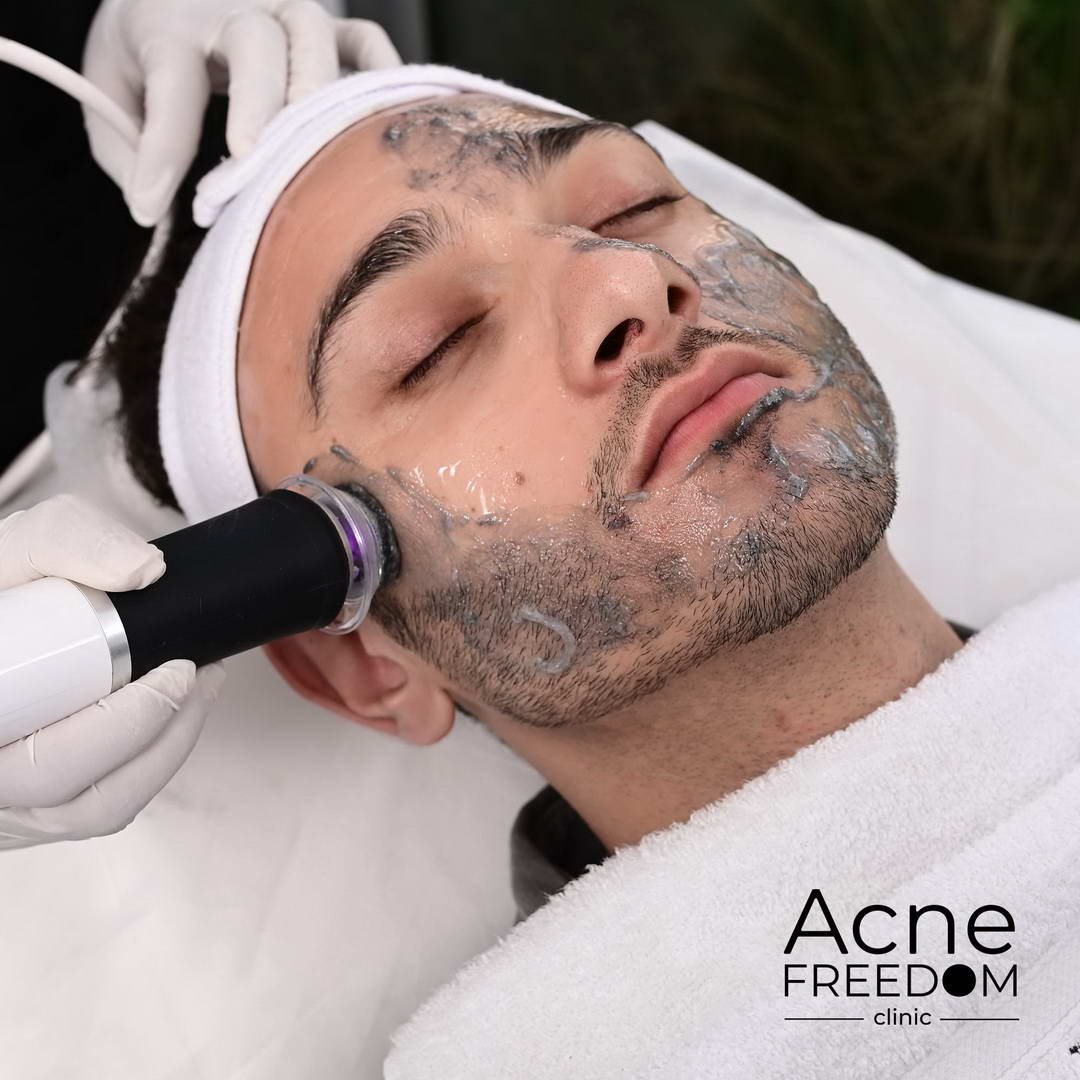
Jet Peel is a non-invasive skin treatment that uses a high-velocity stream of air and liquid, usually saline, to cleanse the skin, provide light exfoliation, and support hydration. It is commonly chosen by people who want a fresher look with little to no downtime.[1,2]
At Acne Freedom Clinic in Mumbai, we usually position Jet Peel as a supportive, dermatologist-supervised option, not a standalone answer for acne. It may help selected acne-prone patients with surface oil, debris, mild congestion, and skin freshness, but active acne still needs a proper assessment and a personalised plan.[3,4]
What is Jet Peel?
How is Jet Peel different from a regular facial?
A regular salon facial often focuses on cleansing, massage, masks, and temporary brightness. Jet Peel is more device-led. It uses pressurised air and liquid to work on the skin surface without needles and without direct abrasive contact.[1] For acne-prone or easily irritated skin, that can feel more controlled than facials built around scrubs, rubbing, or heavy massage.[2,4]
Is Jet Peel a medical facial or a cosmetic add-on?
It sits between the two. Jet Peel is often chosen for skin refreshment, hydration, and glow, but in a dermatologist-led clinic it can also be part of a broader acne-support plan. In that setting, it is best understood as an adjunct treatment. It may support comfort and maintenance, while core acne management still depends on acne type and severity.[3,4]
Why do people choose Jet Peel in Mumbai?
What are the main benefits of Jet Peel?
- It is non-invasive and generally comfortable for most patients.
- It can cleanse and lightly exfoliate without needles or strong friction.
- It usually involves little to no downtime.
- It can leave the skin looking fresher and better hydrated for a short-term glow.[1,2]
- It may be used as a supportive option between more targeted acne treatments.[3,4]
Can Jet Peel help acne-prone, dull, or dehydrated skin?
It can help selected patients, depending on the main concern. If the issue is dullness, uneven surface feel, mild congestion, or dehydrated-looking skin, Jet Peel may offer a visible refresh. If the issue is active inflammatory acne, deep nodules, or acne that keeps recurring, Jet Peel is usually not enough on its own.[1,3] For acne-prone skin, we treat it as a supportive procedure rather than a cure-focused one.[3,4]
How does Jet Peel work?
What does the air and saline jet actually do?
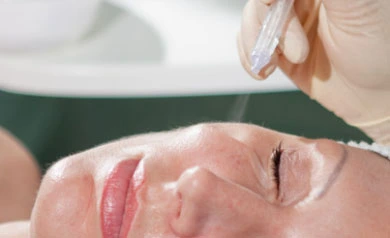
The device creates a high-speed jet of air and liquid droplets that move across the skin. This helps remove surface debris, gives mild exfoliation, and improves the feeling of cleanliness and freshness after the session. Published descriptions of the technology note that it works without direct needle penetration and without the scraping seen in more abrasive procedures.[1,2]
Can Jet Peel support ingredient delivery into the skin?
That is one of the reasons the technology gets attention. Jet-based systems have been studied for transdermal delivery, meaning they may help certain solutions move deeper than simple surface application.[2] For acne-focused care, expectations should still stay realistic. Supportive delivery and hydration are not the same as proven acne clearance, and persistent or scarring acne needs dermatologist-led treatment.[3,4]
Who is a good candidate for Jet Peel?
Who may benefit most from Jet Peel?
- People with dull, tired-looking skin who want a non-invasive refresh.
- Patients with mild congestion or rough surface texture who prefer a gentle clinic treatment.
- Those with acne-prone skin who want a supportive facial under dermatologist oversight.
- People preparing for an event who want a fresher look with minimal downtime.
- Men and women who want a treatment with no needles and usually no numbing.[1,2,4]
Who may not be the right candidate right now?
- People with severe, painful, or cystic acne that needs primary medical treatment first.[3]
- Patients with active skin infection, broken skin, or significant irritation in the treatment area.[5]
- Those with very reactive skin, recent procedures, or a damaged skin barrier that needs recovery first.
- Anyone expecting Jet Peel to replace a full acne management plan when the condition is moderate to severe.[3,4]
Is there any downtime after Jet Peel?
What can you expect in the first 24 to 48 hours?
Downtime is usually low. Many people return to normal activity the same day. Some may notice temporary pinkness, mild sensitivity, or a feeling of tightness, especially if the skin barrier is already stressed. The first day or two after a session is usually best kept simple with a gentle cleanser, a suitable moisturiser, and sun protection.[4,6]
When can you return to work, events, or makeup?
Most patients can return to work the same day. Many also choose Jet Peel when they want a treatment close to an event because it is generally low downtime. Makeup timing depends on how calm the skin looks after the session, but acne-prone patients should avoid heavy, greasy, pore-clogging products and stick to acne-friendly, non-comedogenic options.[4,6]
Is Jet Peel safe for acne-prone and sensitive skin?
What are the common precautions and contraindications?
- Do not treat over active infection, broken skin, or untreated inflamed lesions without medical review.[5]
- Be cautious if the skin barrier is already compromised from strong home products or recent procedures.
- Patchy sensitivity, rosacea tendency, eczema-prone skin, or recent irritation may need a more conservative approach.
- Patients with moderate to severe acne may need treatment sequencing so the facial does not distract from the main acne plan.[3,4]
- Any procedure, even one seen as gentle, still depends on proper hygiene, correct patient selection, and medical supervision.[5]
When should Jet Peel be treated as a supportive, not standalone, option?
Jet Peel should clearly be treated as supportive when acne is active, inflamed, recurrent, painful, hormonally driven, or already causing marks and scars. Current acne guidelines continue to centre evidence-based medical therapies tailored to acne type and severity.[3] Jet Peel may support skin comfort and maintenance, but it should not delay or replace treatment that targets acne itself.[3,4]
What results can you realistically expect from Jet Peel?
When do early results show?
Some patients notice an early improvement in how the skin feels and looks, often as better freshness, smoother feel, or a cleaner-looking surface soon after the session.[1,2] Early glow is not the same as long-term acne change, though. In acne-prone patients, results depend on whether the real problem is dehydration, surface congestion, oiliness, active inflammation, or post-acne marks.[3,4]
How many sessions are usually needed for clearer, fresher-looking skin?
For general refreshment, some people feel one session is enough before an event or after a phase of dullness. For maintenance, a course may be planned at intervals based on skin behaviour and goals. For acne-prone skin, we prefer to review response after the first one or two sessions rather than promise a fixed outcome upfront.
How long do results usually last?
The refreshed feel is usually temporary, and duration varies by skin type, oiliness, routine, and whether the person is also following an acne-safe home and clinic plan. Jet Peel works best when expectations are realistic and the treatment sits inside a wider plan that respects the patient’s skin type and acne behaviour.[3,4]
Jet Peel vs other skin treatments: which option fits best?
Jet Peel vs HydraFacial
Jet Peel and HydraFacial are both commonly discussed for glow and maintenance. Jet Peel uses a high-speed jet stream, while HydraFacial is more suction and tip-based. Jet Peel may appeal to patients who want a mist-like treatment feel, while HydraFacial may suit those specifically looking for vacuum-based cleansing. In acne-prone skin, the better choice depends on barrier status, sensitivity, and whether the goal is a quick refresh or a larger acne strategy.
Jet Peel vs chemical peel
A chemical peel relies on acids to create controlled exfoliation. Jet Peel is generally gentler in feel and usually has less visible downtime. But if the main concern is acne marks, comedonal acne, or pigmentation, a carefully chosen doctor-led chemical peel may at times be more targeted than Jet Peel. Jet Peel is better only in the right context.
Jet Peel vs microdermabrasion
Microdermabrasion mechanically exfoliates the skin surface. Jet Peel tends to feel less abrasive because it uses air and liquid instead of direct surface abrasion. For patients with easily irritated or acne-prone skin, that softer approach may be appealing, but the final choice still depends on skin tolerance and treatment goals.
Jet Peel vs acne-focused clinic facials
Acne-focused clinic facials are often broader protocols that may include cleansing, selected extractions, acne-safe products, and steps adjusted for active breakouts. Jet Peel is narrower. It is a device-led treatment that may sit inside or alongside a broader acne-care plan. If the main concern is active acne or repeated congestion, a full doctor-led acne protocol may be more useful than Jet Peel alone.
How do we personalise Jet Peel at Acne Freedom Clinic?
When do we combine it with acne peels, extractions, or doctor-led protocols?
We only combine treatments when the skin barrier, acne type, and treatment timing make sense. Jet Peel may be considered as part of a larger acne programme in selected patients who also need monitored skin maintenance or a gentler in-clinic refresh between more active treatment steps. Our planning starts with skin behaviour, not with a menu card.
When do we avoid combining treatments in the same sitting?
We are more cautious when the skin is irritated, recently exfoliated, sun-sensitive, inflamed, or already reacting to strong home products. In acne-prone skin, restraint is often a sign of good treatment planning. Not every visit has to include multiple steps, and protecting the barrier can be more useful than doing more in one sitting.[3,4,6]
What is the indicative Jet Peel cost at Acne Freedom Clinic?
Jet Peel cost varies by treatment area, the depth and duration of the session, and whether the visit is a standalone facial or part of a broader dermatologist-led acne protocol. Instead of focusing only on a headline price, it is more useful to ask what is included and whether the session is actually suited to acne-prone skin. As an indicative figure, a single session costs Rs 4500
Some people choose a single session when the main goal is skin refreshment before an event. Others do a short course when the aim is maintenance over time. At our clinic, pricing is best discussed after assessment because the right plan depends on whether Jet Peel is being used alone, as a supportive add-on, or inside a broader acne-care programme.
FAQs
Is Jet Peel good for active acne?
It may suit selected acne-prone patients, but it should usually be seen as a supportive option, not the main treatment for active inflammatory acne. If breakouts are frequent, painful, or leaving marks, a dermatologist-led acne plan is more important.[3,4]
Is Jet Peel safe before an event?
Often yes, because it is a low-downtime treatment for many people. But timing still matters. If your skin is very sensitive, irritated, or recently treated, it is better to assess first rather than assume every low-downtime treatment will suit you on a deadline.
Can Jet Peel help acne marks or only skin texture?
It may improve surface freshness and texture for some patients, but acne marks and scars usually need a more targeted plan. If marks are the main concern, Jet Peel may be supportive at best, not the centre of treatment.
How often can Jet Peel be done?
There is no universal rule. Frequency depends on your skin type, your goals, how your skin responds, and whether Jet Peel is part of a larger acne protocol. We prefer response-based planning instead of fixed promises.
Can Jet Peel be combined with peels or lasers?
Sometimes, but only when the skin condition and treatment timing allow it. In acne-prone skin, combining too many active steps can increase irritation. That is why procedure sequencing is important.
Is Jet Peel suitable for men as well as women?
Yes. Acne-prone, oily, dull, or dehydrated skin concerns are not limited by gender. Suitability depends on skin condition, sensitivity, and the treatment goal, not whether the patient is male or female.[4]
Sources
- Golan J, Tadir Y, Shariat M, Sagiv R, Golan A. JetPeel: a new technology for facial rejuvenation. Ann Plast Surg. 2005. https://pubmed.ncbi.nlm.nih.gov/15785274/
- Iannitti T, Palmieri B, De Stefano V. Short review on face rejuvenation procedures: focus on preoperative assessment and noninvasive treatment. Clin Cosmet Investig Dermatol. 2011. https://pubmed.ncbi.nlm.nih.gov/21971508/
- Reynolds RV, Yeung H, Cheng CE, et al. Guidelines of care for the management of acne vulgaris. J Am Acad Dermatol. 2024. https://www.jaad.org/article/S0190-9622(23)03389-3/fulltext
- Indian Association of Dermatologists, Venereologists and Leprologists. Acne. https://public.iadvl.org/acne
- Kaptanoglu AF, Kurt N, Karakas M. Facial and periorbital cellulitis due to skin peeling with Jet Peel. Case Rep Dermatol Med. 2014. https://pmc.ncbi.nlm.nih.gov/articles/PMC4009203/
- Mukhopadhyay P. Cleansers and their role in various dermatological disorders. Indian J Dermatol. 2011. https://pmc.ncbi.nlm.nih.gov/articles/PMC3088928/
MEDICALLY REVIEWED BY
Dr. Batul Patel (Dermatologist)
Medical Director – The Bombay Skin Clinic
Dr. Batul Patel is an award winning certified dermatologist, honoured as the “Dermatologist of the Year 2023” at the national level by The Economic Times. View profile